The Second Amendment: How the People’s Right Shaped the Firearms Industry : Part II
 TAC MASTER
Last updated: 22 Dec 2025
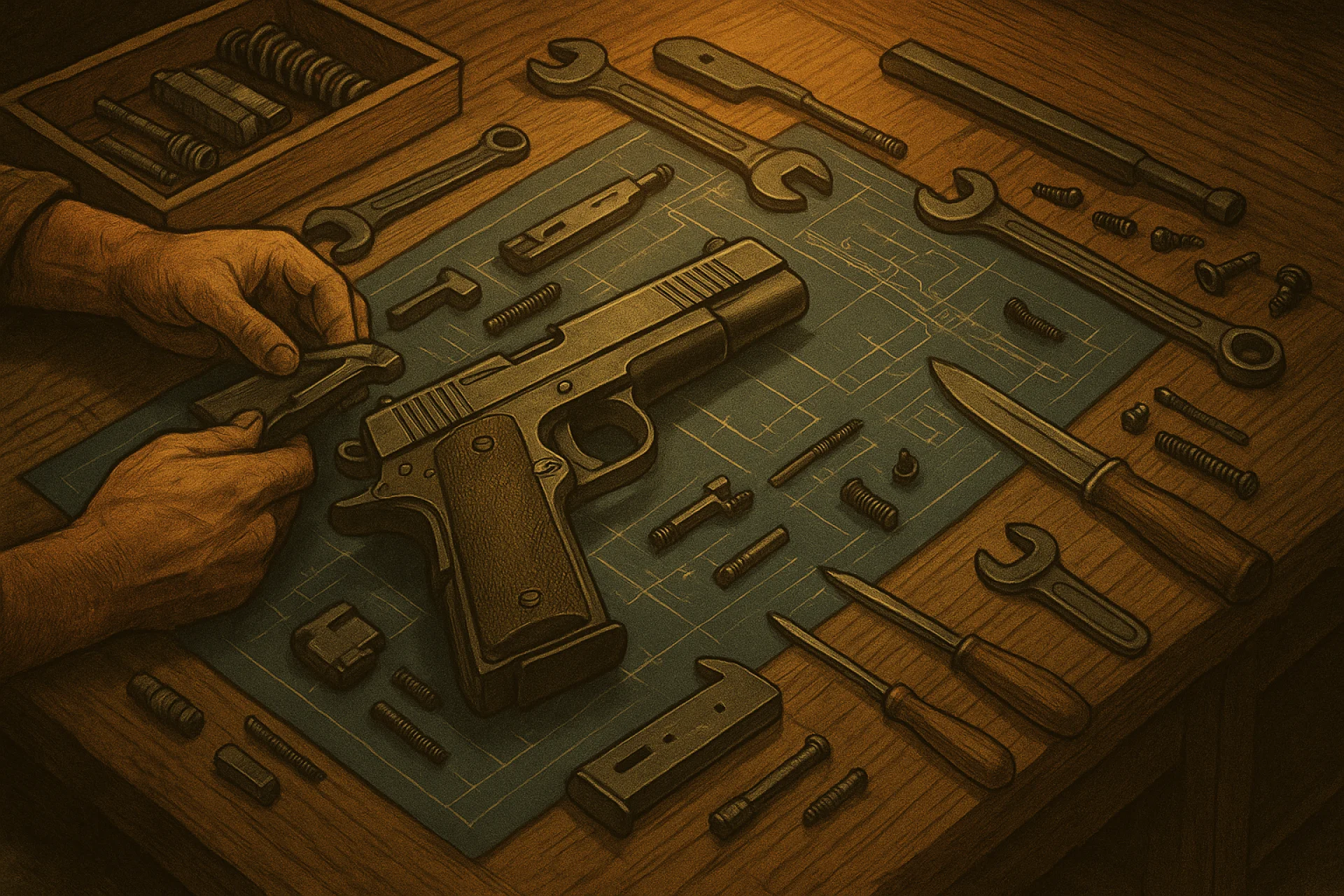
The Second Amendment - From Civil Rights to the Firearms Industry Ecosystem
The Second Amendmentthe - right enshrined in the U.S. Constitution - began with a simple but powerful idea:
"The people have the right to protect themselves."
Yet its influence extends far beyond the notion of owning a weapon.
Over the centuries, this principle evolved into a vast ecosystem that connects the firearms industry, tactical training, and post-service careers for military and law enforcement personnel.
This network - known as the Firearms Ecosystem - has become a cornerstone of America's economy, national security, and civic culture, encompassing everyone from defense manufacturers to responsible citizens.
The Second Amendmentthe - right enshrined in the U.S. Constitution - began with a simple but powerful idea:
"The people have the right to protect themselves."
Yet its influence extends far beyond the notion of owning a weapon.
Over the centuries, this principle evolved into a vast ecosystem that connects the firearms industry, tactical training, and post-service careers for military and law enforcement personnel.
This network - known as the Firearms Ecosystem - has become a cornerstone of America's economy, national security, and civic culture, encompassing everyone from defense manufacturers to responsible citizens.
Driving Sustainable Growth in the Firearms and Tactical Industry
Firearms manufacturers such as Colt, Remington Arms, Winchester, Smith & Wesson, Daniel Defense, Trijicon, EOTech, SureFire, Safariland, and LMT all began as military suppliers before expanding into the civilian market under the framework of the Second Amendment.
The civilian sector became a powerful force for innovation-driving advances in modern firearm technologies, optics, targeting systems, tactical gear, and accessories. It also attracted investment and expertise from global players seeking access to both the U.S. civilian and defense markets, including renowned European brands like Glock, Aimpoint, FN, and SIG Sauer.
The civilian firearms market is therefore a critical engine behind the growth of both the weapons and tactical equipment industries.
By developing commercial-grade versions that meet professional standards, manufacturers created a cycle of investment, research, and job creation that continues to expand today.
This ecosystem extends far beyond production-into training centers, shooting competitions, indoor and outdoor ranges, tactical shops, and even specialized media that together form a unique subculture.
Moreover, private companies are able to develop independently, without relying solely on government contracts.
Entrepreneurs and innovators-such as Magpul, Leupold, Blackhawk, and 5.11 Tactical-compete freely in the open market.
When their products prove successful among civilians, government agencies can later procure them without funding exclusive, closed research programs that limit competition.
In this way, the right to bear arms has become a driving force of Americas economic and technological development.
The civilian sector became a powerful force for innovation-driving advances in modern firearm technologies, optics, targeting systems, tactical gear, and accessories. It also attracted investment and expertise from global players seeking access to both the U.S. civilian and defense markets, including renowned European brands like Glock, Aimpoint, FN, and SIG Sauer.
The civilian firearms market is therefore a critical engine behind the growth of both the weapons and tactical equipment industries.
By developing commercial-grade versions that meet professional standards, manufacturers created a cycle of investment, research, and job creation that continues to expand today.
This ecosystem extends far beyond production-into training centers, shooting competitions, indoor and outdoor ranges, tactical shops, and even specialized media that together form a unique subculture.
Moreover, private companies are able to develop independently, without relying solely on government contracts.
Entrepreneurs and innovators-such as Magpul, Leupold, Blackhawk, and 5.11 Tactical-compete freely in the open market.
When their products prove successful among civilians, government agencies can later procure them without funding exclusive, closed research programs that limit competition.
In this way, the right to bear arms has become a driving force of Americas economic and technological development.
Expanding Public Access to Firearms Training and Knowledge
As citizens gained the constitutional right to own firearms, demand grew for safe, structured training-ranging from self-defense and competition shooting to tactical operations and proper weapon maintenance.
This led to the establishment of countless training schools, shooting ranges, and tactical academies across the United States-many founded by former military and police professionals who bring real-world experience to the civilian sphere.
Together, they helped shape a new cultural standard: Responsible Gun Ownership-the idea that discipline, awareness, and accountability are inseparable from the right to own a firearm.
This led to the establishment of countless training schools, shooting ranges, and tactical academies across the United States-many founded by former military and police professionals who bring real-world experience to the civilian sphere.
Together, they helped shape a new cultural standard: Responsible Gun Ownership-the idea that discipline, awareness, and accountability are inseparable from the right to own a firearm.
Creating Career Opportunities for Veterans and Retired Officers
One of the clearest outcomes of this ecosystem is its ability to provide meaningful post-service careers for military and law enforcement personnel.
Many veterans and retired officers have become instructors, security consultants, range operators, developers, or owners of firearms and tactical training companies-directly serving the public and passing on their expertise.
This continuity allows those with real operational experience to remain within their field, sustain their livelihoods, and preserve tactical knowledge within society.
Many veterans and retired officers have become instructors, security consultants, range operators, developers, or owners of firearms and tactical training companies-directly serving the public and passing on their expertise.
This continuity allows those with real operational experience to remain within their field, sustain their livelihoods, and preserve tactical knowledge within society.
Strengthening the Relationship Between Law Enforcement and Civilians
The Second Amendment also creates a vital bridge between citizens and law enforcement.
Both sides share an understanding of weapons and the responsibilities that accompany them.
This mutual respect fosters training collaborations, knowledge exchange, and a deeper sense of trust.
It narrows the gap between "law enforcers" and "armed citizens," forming a culture of cooperation rather than opposition-one built on shared values of security and discipline.
Both sides share an understanding of weapons and the responsibilities that accompany them.
This mutual respect fosters training collaborations, knowledge exchange, and a deeper sense of trust.
It narrows the gap between "law enforcers" and "armed citizens," forming a culture of cooperation rather than opposition-one built on shared values of security and discipline.
Building a Cultural Foundation for the "Citizen Warrior"
At its core, the Second Amendment acknowledges that citizens themselves are the first line of defense.
Not merely protected, but protectors.
Through training, innovation, and knowledge transfer, the concept of the Citizen Warrior has taken root-a civilian with discipline, readiness, and the moral will to defend what they love.
Even after retirement, those with military or law enforcement experience continue to play an essential role in society-as teachers, defenders, and spiritual leaders of disciplined freedom.
"The security of the state begins with disciplined citizens."
Not merely protected, but protectors.
Through training, innovation, and knowledge transfer, the concept of the Citizen Warrior has taken root-a civilian with discipline, readiness, and the moral will to defend what they love.
Even after retirement, those with military or law enforcement experience continue to play an essential role in society-as teachers, defenders, and spiritual leaders of disciplined freedom.
"The security of the state begins with disciplined citizens."
Conclusion
The Second Amendment is not merely a law about owning firearms.
It is the foundation of an ecosystem that connects the state, the people, and those who serve on the tactical front line.
Freedom, in this sense, is not defined by the number of weapons a person owns-
but by the responsibility and discipline with which they are carried.
This is the spirit that sustains the firearms industry, the culture of training, and the discipline of the American people to this day.
And it leads us naturally to the next chapter-
where we explore the meaning of the Citizen Warrior and why this ideal lies at the heart of modern American society.
It is the foundation of an ecosystem that connects the state, the people, and those who serve on the tactical front line.
Freedom, in this sense, is not defined by the number of weapons a person owns-
but by the responsibility and discipline with which they are carried.
This is the spirit that sustains the firearms industry, the culture of training, and the discipline of the American people to this day.
And it leads us naturally to the next chapter-
where we explore the meaning of the Citizen Warrior and why this ideal lies at the heart of modern American society.
Related Content

Explore the origins of the United States’ Second Amendment — why the right to bear arms lies at the heart of freedom, and why this principle still resonates through modern society.
TAC MASTER
17 Oct 2025

the belief that freedom can survive only when the people themselves are prepared to defend it. But a Citizen Warrior does not simply mean an armed civilian. It refers to citizens who are ready — through discipline, knowledge, and responsibility — to protect what they love and what they believe is worth defending.
TAC MASTER
5 Dec 2025