The Second Amendment: the Rise of the Citizen Warrior The First Line of Freedom : Part III
 TAC MASTER
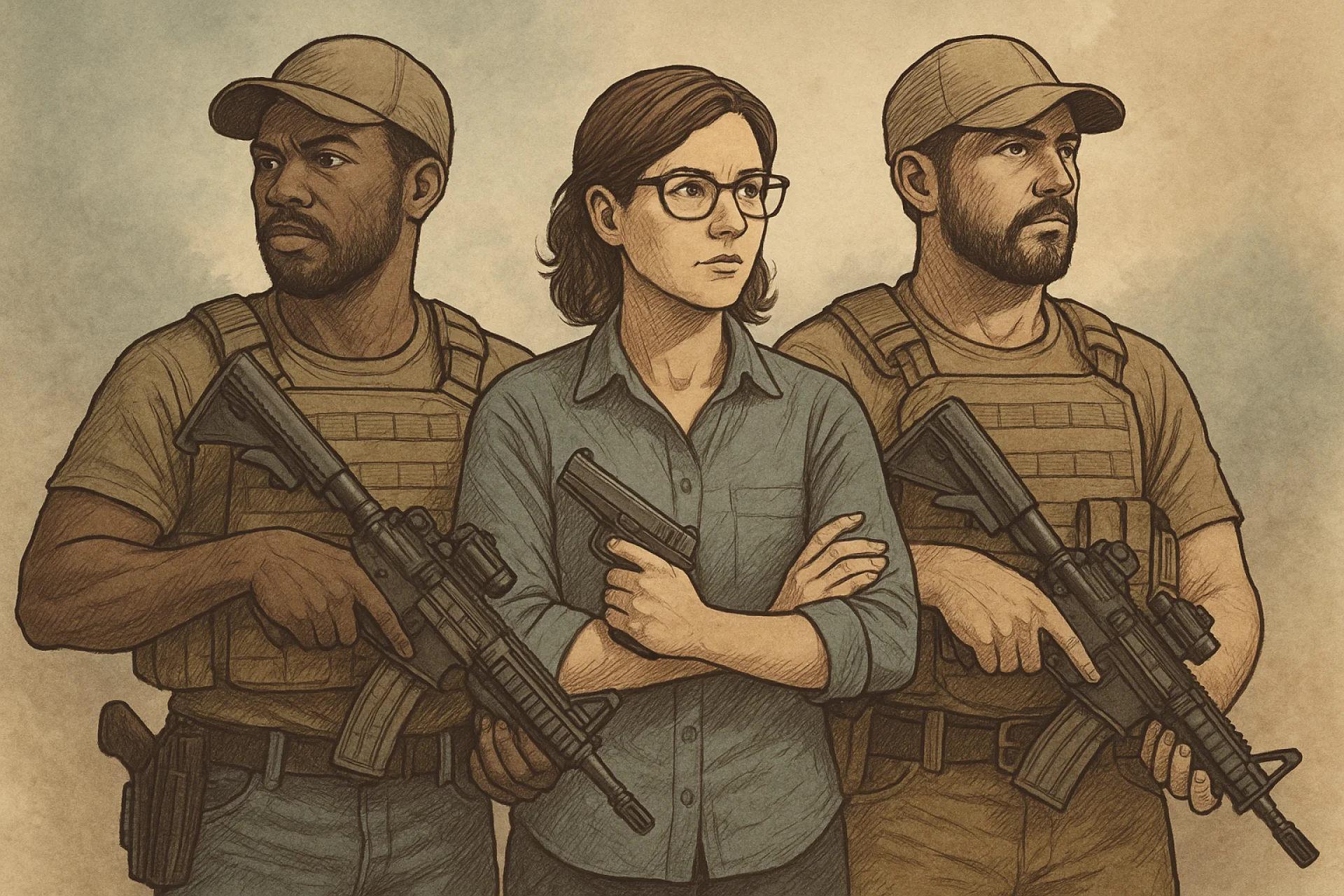
The Second Amendment and the Making of the Citizen Warrior
The First Line of Defense for Freedom
Disciplined civilians are the foundation of every stable society.
When people hear the word warrior, they often imagine soldiers on a battlefield.
But under the philosophy behind The Second Amendment, the word warrior is not limited to uniforms.
It refers to any individual who is prepared to defend their own freedom and the freedom of their community.
The Roots of the Citizen Warrior Concept
This idea is deeply rooted in the founding era of the United States, when every able citizen was part of the Militia
a citizen force established to defend a free state from external and internal threats.
"A well regulated Militia, being necessary to the security of a free State"
This line in The Second Amendment shaped a cultural belief:
"National security begins with the readiness of the people."
Although the role of the Militia has evolved over time, the spirit of the Citizen Warrior lives on through training, education, and responsible conduct regarding the use of arms.
Citizen Warrior and the Responsibility of Freedom
Being a Citizen Warrior is not merely about possessing a weapon.
It is about having the discipline, understanding, and intention to use it only to protect, never to harm.
In the United States, the mindset of Responsible Gun Ownership is cultivated at the community level.
People are taught:
> the law
> safe handling
> self-defense
> how to assist others during emergencies
This reflects the core truth:
"Real freedom does not come from the weapon in your hand, but from the responsibility in your heart."
To many Americans, a firearm is not a symbol of aggression
but a symbol of preparedness:
the readiness to defend ones family, community, and nation.
Training: From the Battlefield to the Civilian World
Civilian firearms and tactical training programs in the U.S. were shaped by veterans and former law enforcement officers.
They brought real battlefield experience and translated it into:
> tactical firearms instruction
> home defense
> survival skills
> emergency response
Many training centers have become institutions teaching both skills and mindset, rooted in the belief:
"Skill without discipline is danger; discipline turns skill into defense."
This training gives civilians a deeper understanding of their role
not merely as consumers of firearms, but as contributors to the national security ecosystem.
Civilians and the Security of the State
From a strategic perspective, the Citizen Warrior philosophy creates a system of decentralized defense.
Trained and capable civilians become a reserve force of the nation, able to respond rapidly to:
> emergencies
> disasters
> acts of violence
> foreign or domestic threats
This model exists today in various forms such as the National Guard and Civil Defense organizations.
The result?
A security system that does not rely solely on the government
but stands on the readiness of the people.
A Culture of Responsibility and Honor
Citizen Warrior is not merely a tactical concept.
It is a spirit rooted in:
> honor
> dignity
> self-sacrifice
The right to bear arms is not a free privilege
it is a duty to protect the rights of others.
This is why America's firearms culture endures.
It is driven by values far deeper than "shooting":
it is about standing for what is right.
------------
Citizen Warrior: A Declaration of Responsible Freedom
This is what Americans refer to when they speak of a Citizen Warrior:
a civilian shaped by discipline, responsibility, and the heart of a guardian.
"The state may protect the country, but only the people can protect their own freedom."
Citizen Warrior emerged from the same foundation as The Second Amendment
the belief that freedom survives only when the people themselves are prepared to defend it.
Yet the Citizen Warrior ideal does not require civilians to be armed.
It requires civilians to be disciplined, knowledgeable, and responsible for what they love and wish to defend.
At its core:
Citizen Warrior = An ordinary person who is ready enough not to become a burden,
and ready enough to protect others when necessary.
------------
1. Why Modern Societies Need Citizen Warriors
Todays world faces threats more complex than ever:
> community emergencies
> natural disasters
> social violence
> political division
> crime faster than state response
The state cannot be everywhere.
And traditional forces alone are not enough.
A new truth has emerged:
A stable society is one where citizens can help themselves and others.
Whether through first aid, crisis response, or moral courage,
Citizen Warriors fill the gap that institutions cannot always reach.
------------
2. The Non-Armed Dimension of the Citizen Warrior
The biggest misconception is equating Citizen Warriors with armed civilians.
In reality, the essence is discipline and responsibility.
A Citizen Warrior is someone who:
> controls themselves
> is not a burden on society
> steps in when others need help
> has basic safety and emergency skills
> remains calm under pressure
> stands against injustice even when unsupervised
Because the greatest weapon is not a gun
but a disciplined mind.
The strongest society is one where the people are strong.
------------
3. Global Examples: Citizen Warriors Without a Second Amendment
Several countries have developed similar concepts without an American-style legal framework:
Finland
Civilians undergo strong training and form part of the national reserve
making Finland one of the most prepared citizenries in Europe.
Switzerland
Civilians may possess firearms, but with extremely high discipline
and a cultural understanding that weapons represent responsibility, not power.
Israel
A large portion of the population has basic defense training,
making civilians integral to emergency response.
Across all these examples:
A strong state begins with strong citizens.
------------
4. The Psychological Meaning: Citizen Warrior Creates Inner Stability
When citizens possess safety and self-reliance skills, societies experience:
> less fear
> more mutual respect
> reduced violence
> increased confidence in protecting families and communities
People who can protect rarely abuse their strength.
People who feel helpless often react out of fear.
Citizen Warrior does not create violence
it creates psychological security.
------------
5. What About Thailand?
In the Thai context, this concept is even more important.
But applying it exactly like the American model may not be suitable due to cultural, structural, and political differences.
The question is:
Can Thailand build its own version of the Citizen Warrior?
Perhaps what we need is not widespread civilian armament
but disciplined citizens who are ready, responsible, and capable of helping others in moments of crisis.
This leads us into Part IV:
exploring which lessons from The Second Amendment Thailand should learn,
and which elements should not be copied.
------------
Final Summary: Citizen Warriors Are Built by People, Not Guns
Citizen Warrior represents a silent declaration from the people:
My freedom is my responsibility.
This is the core of freedom in every nation
with or without a Second Amendment.
Freedom does not survive through hope.
It survives through citizens who defend it with discipline and clarity.
And that is the beginning of the Civilian Warrior:
a protector without a uniform,
but with the heart of a guardian.
 TAC MASTER
 TAC MASTER