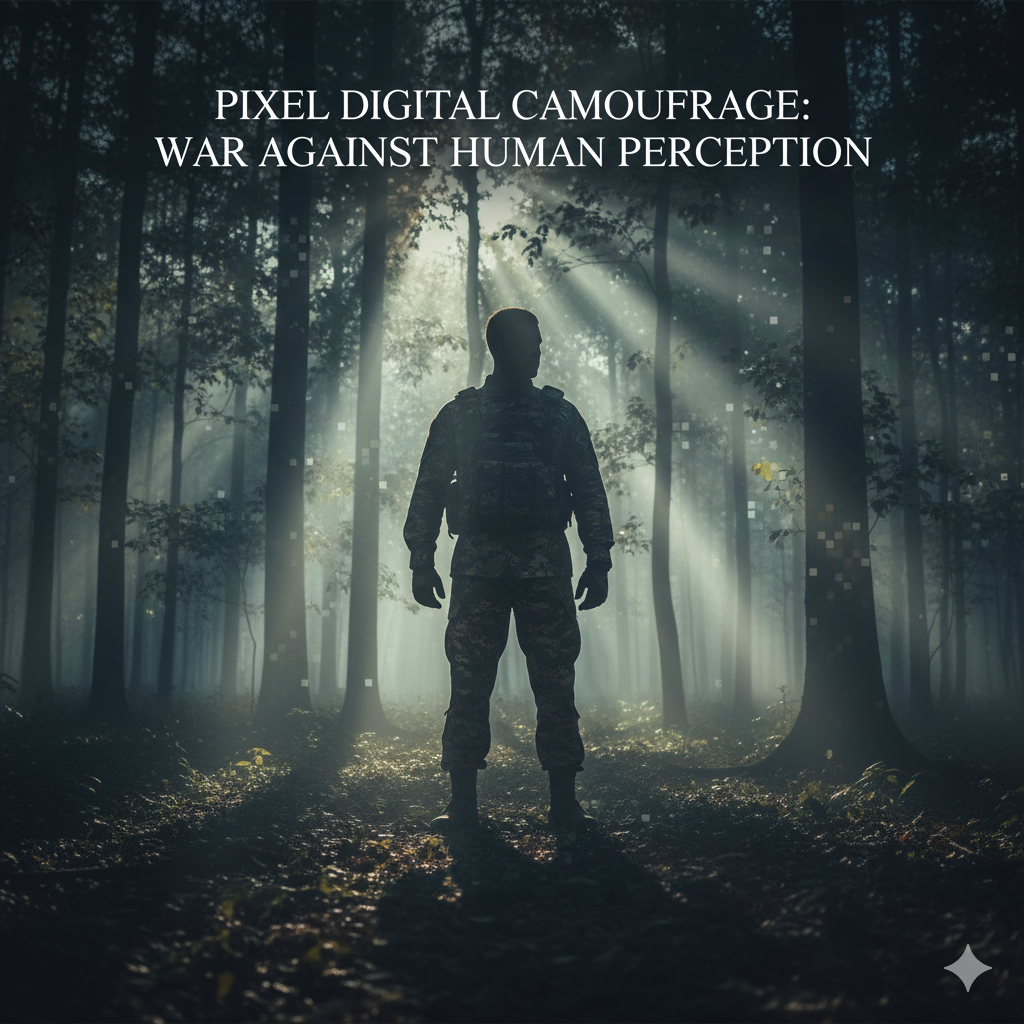
Pixel Digital Camouflage: Camouflage Designed to Fight the Human Brain
 TAC MASTER
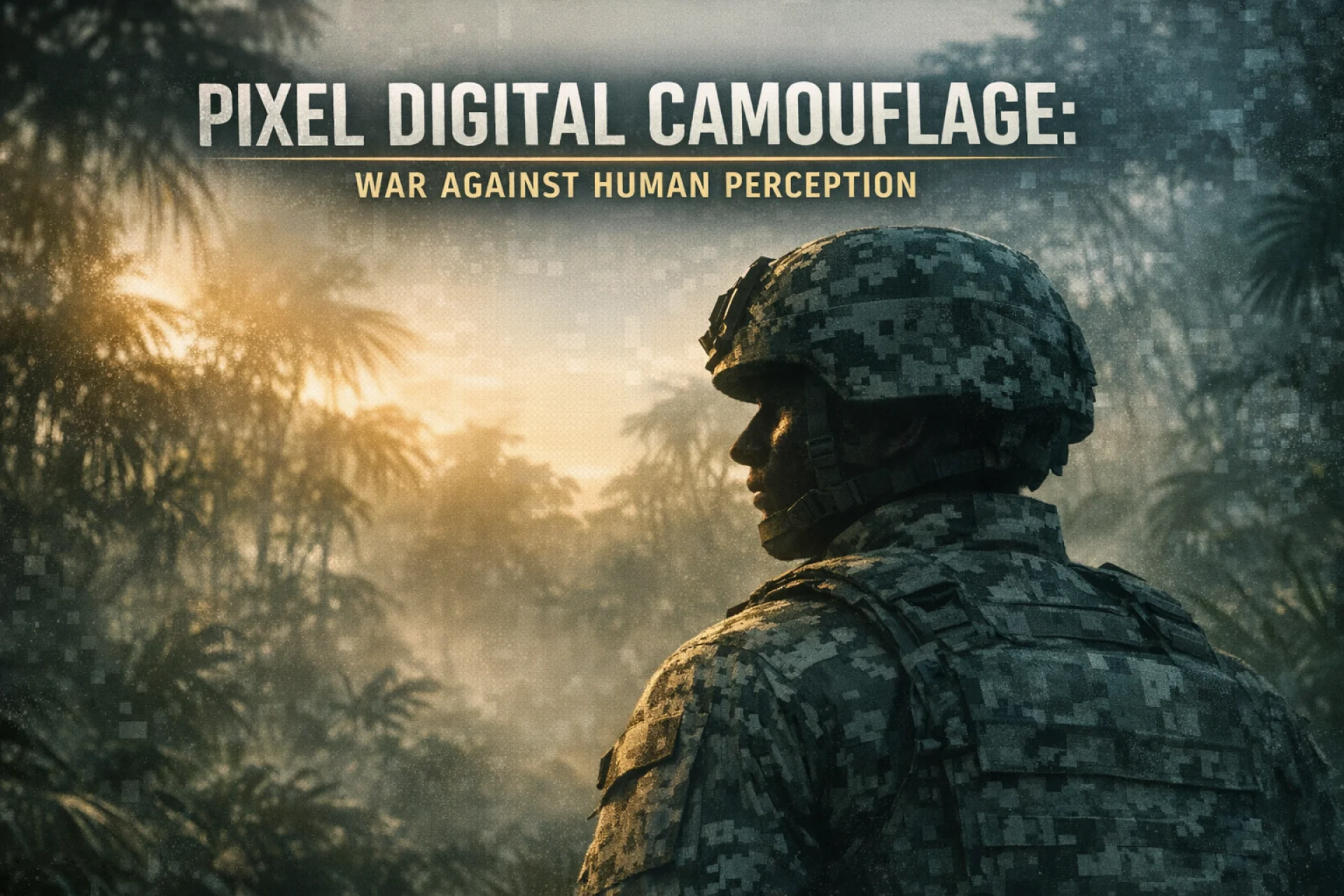
“When camouflage is no longer about ‘disappearing,’ but about fighting human perception.”
Camouflage was once regarded as an art of imitating nature. Over time, military scientists began to recognize a critical limitation of traditional camouflage patterns: as observation distance increases, large organic shapes are visually grouped by the human eye and brain into one or two dominant color masses at medium to long range. This creates a visual “anomaly” within the natural environment, making the outline of a soldier easy to detect. Put simply, at medium or long distances, curved shapes and flowing lines tend to merge into a single large color mass, causing the soldier’s form to stand out once again—like a moving “shadow” or a “walking block of color.”
.
In modern battlefields equipped with high-resolution surveillance technologies, camouflage has therefore transitioned into the realm of military science. The objective is no longer to “make the wearer disappear,” but to engage directly with human visual perception. The human brain instinctively tries to separate what it sees into “meaningful shapes.” When those shapes are disrupted—when edges are unclear or patterns lack continuity—the brain requires more time to process the image. This delay prevents the observer from quickly interpreting what they see and making a rapid decision, effectively buying valuable time for one’s own forces to react.
.
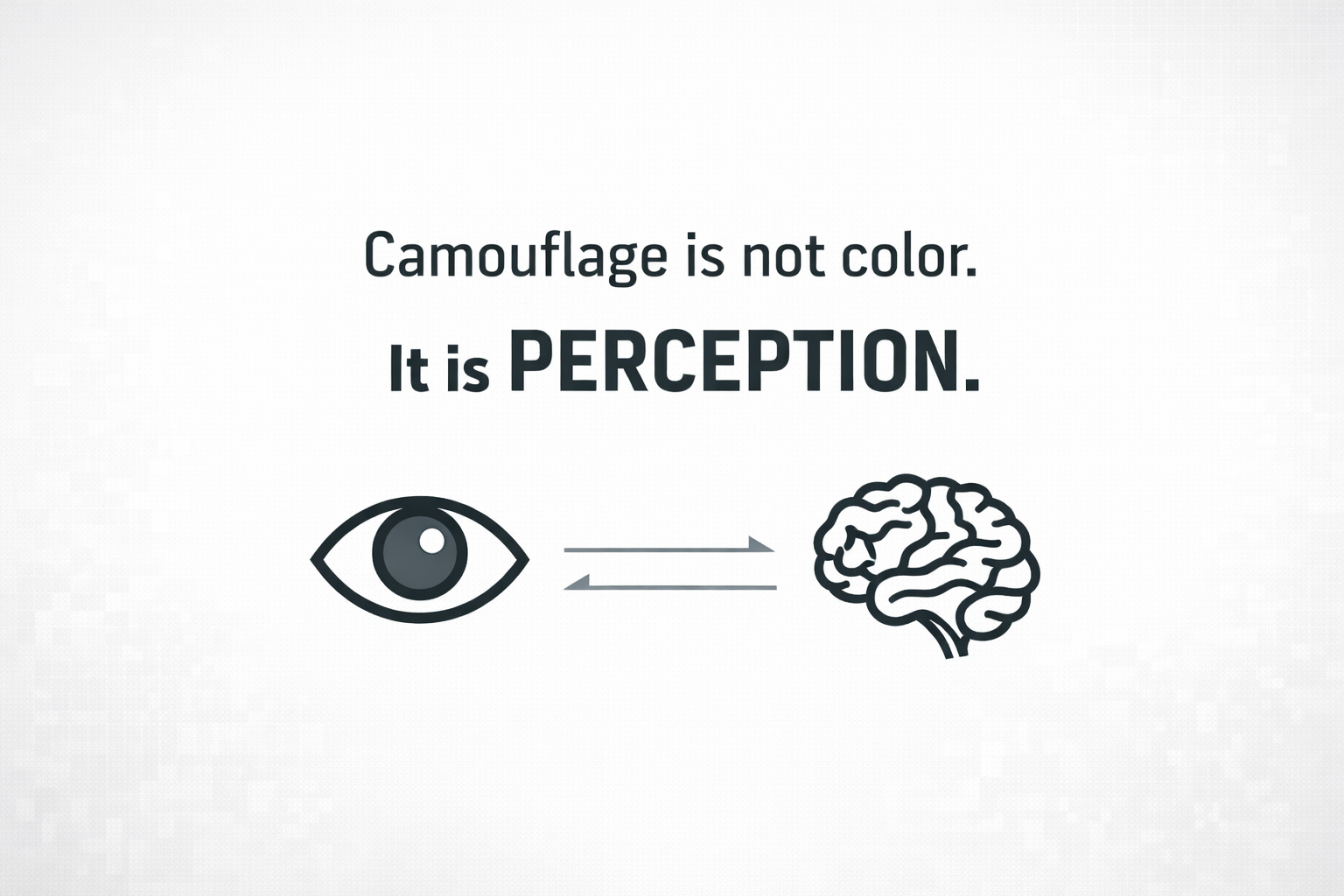
Camouflage, therefore, is not merely about reducing visibility.
It is a fundamental component of the Fundamentals of Combat Survivability—a tactical tool designed to slow down the enemy’s decision-making process. Even a fraction of a second can determine survival. This new way of thinking argues that instead of attempting to imitate leaves or branches, we should seek to disrupt human perception and the enemy’s visual system itself. This marks the transition of camouflage from “an art that imitates nature” to “a science designed to fight the eyes, the brain, and human perception.” It is the starting point of the evolutionary path that has led to what we now know as Digital Camouflage, Pixel Digital Camouflage, or digital camo.
.
The Science Behind Digital Camouflage

Camouflage is not about color; it is about perception.
Humans interpret their surroundings through a process known as Human Visual Perception, which operates in three sequential stages: Detection (noticing something), Recognition (understanding what it is), and Identification (confirming it as a specific target).
From a tactical perspective, the most effective camouflage does not need to render a soldier completely “invisible” (No Detection) at all times. It is often sufficient to disrupt the second and third stages—causing the enemy to hesitate in recognizing what they are seeing (No Recognition) or preventing them from positively identifying it as a hostile target (No Identification) during the critical split second required to decide whether to fire, within the OODA Loop.
However, disrupting the second and third stages is only possible when we first understand how the human brain separates and interprets what it sees.
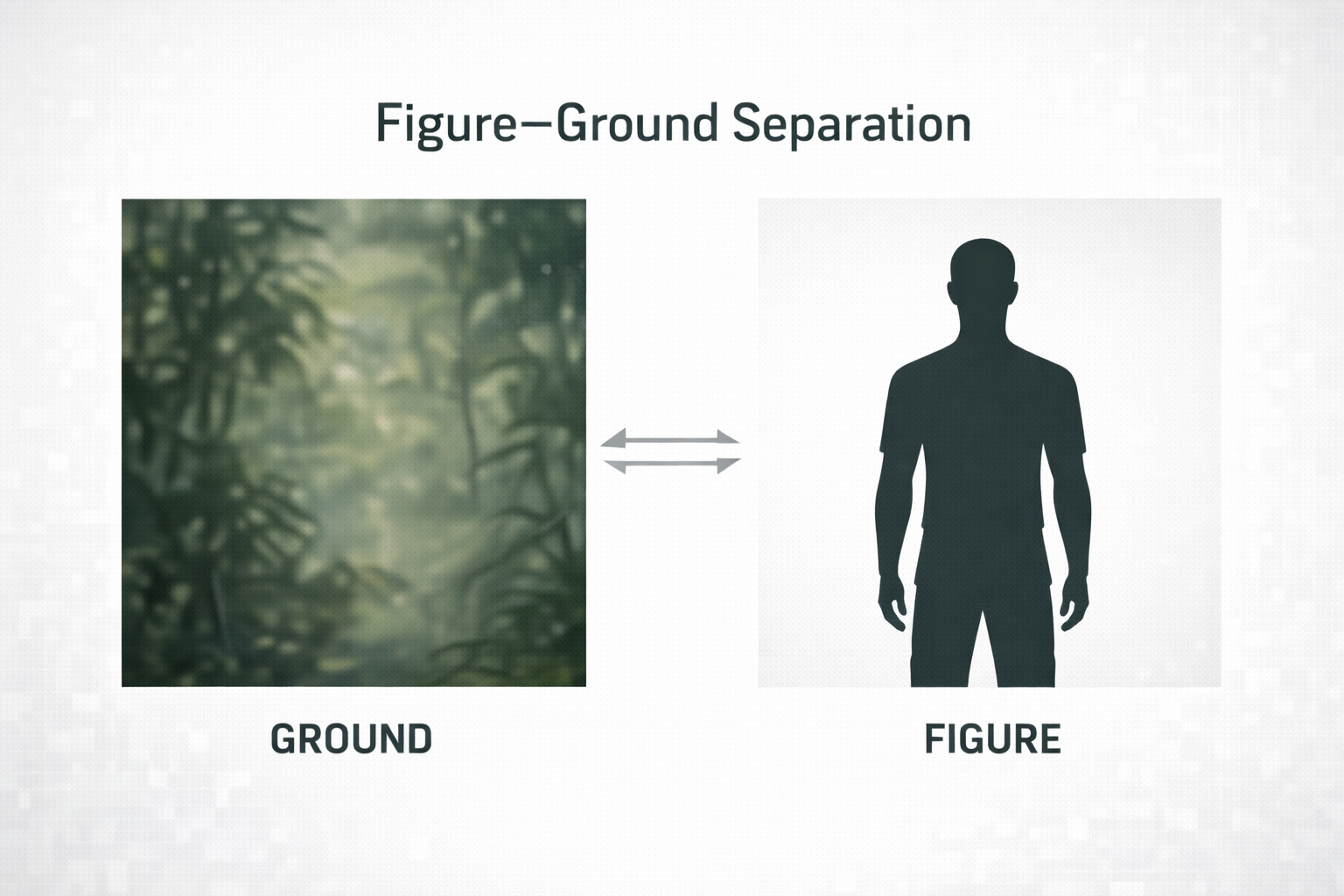
The human brain instinctively separates what it sees into two components: Figure (the object or target) and Ground (the background or surrounding environment). This process is known as Figure–Ground Separation.
In performing this separation, the brain relies on three primary cues:
1. Continuity of edges
2. Continuity of color and light–shadow transitions
3. Symmetry of form
When these cues are disrupted, the brain hesitates and requires more time to determine whether what it is seeing is a human being or merely a shadow within the natural environment. Effective camouflage therefore does not make the body “disappear,” but instead prevents the brain from immediately assembling the human form into a coherent whole.
Disrupting this perceptual process can be achieved by applying the principles of pixels and fractals. A pixel is the smallest visual unit in a digital system, while a fractal describes the structural relationship by which pixels are arranged to form patterns. When applied correctly, this approach produces three critical effects.
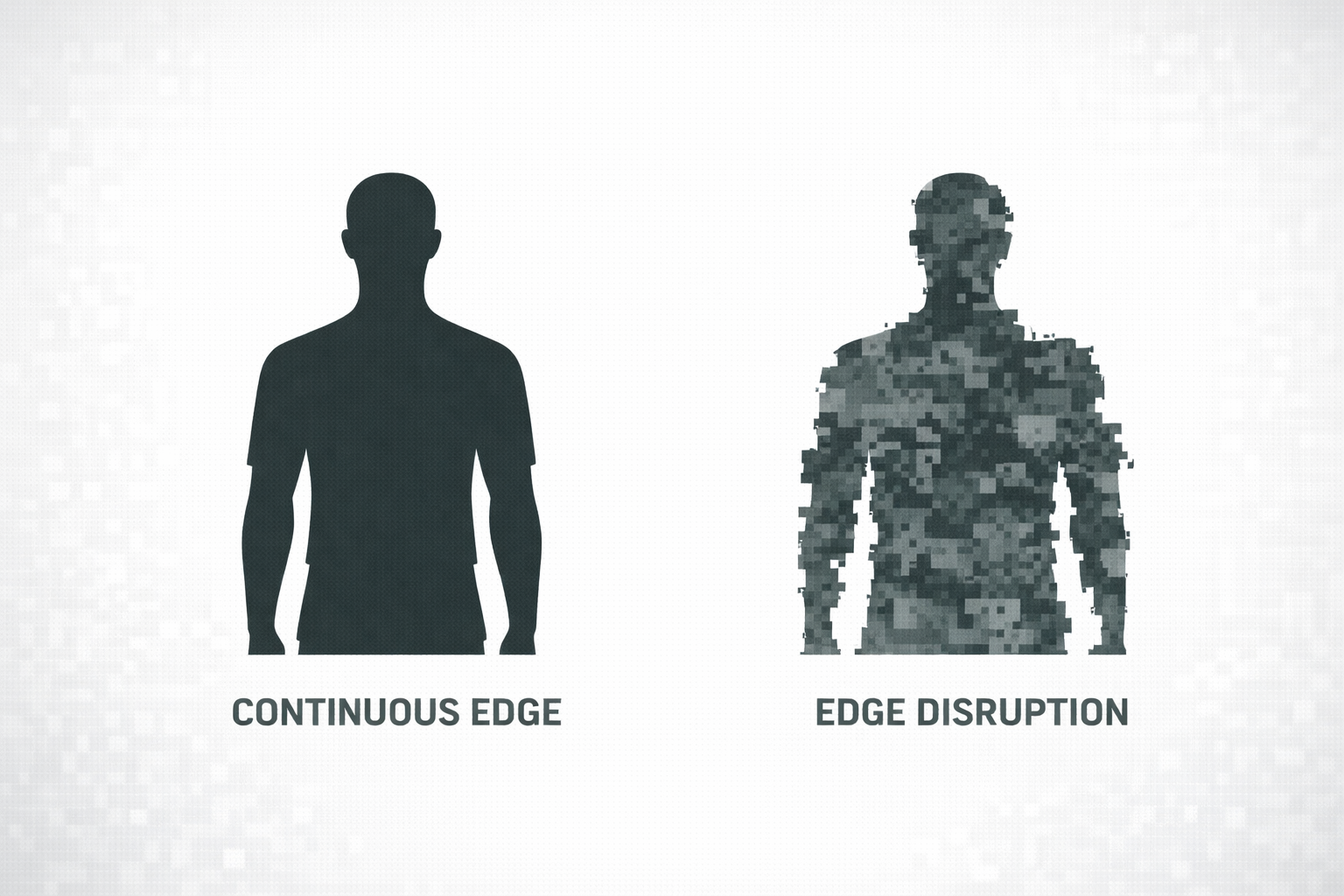
1. The first is Edge Disruption—the deliberate breaking of continuous body outlines such as the shoulders, arms, and torso. These outlines are the primary visual signatures that the human brain recognizes most rapidly when identifying a human figure.
The core idea of self-similarity is that sub-components share a similar form or visual logic with the whole, even as scale changes. In camouflage design, this is achieved by arranging pixels of multiple sizes, allowing the pattern to function simultaneously at different viewing distances.
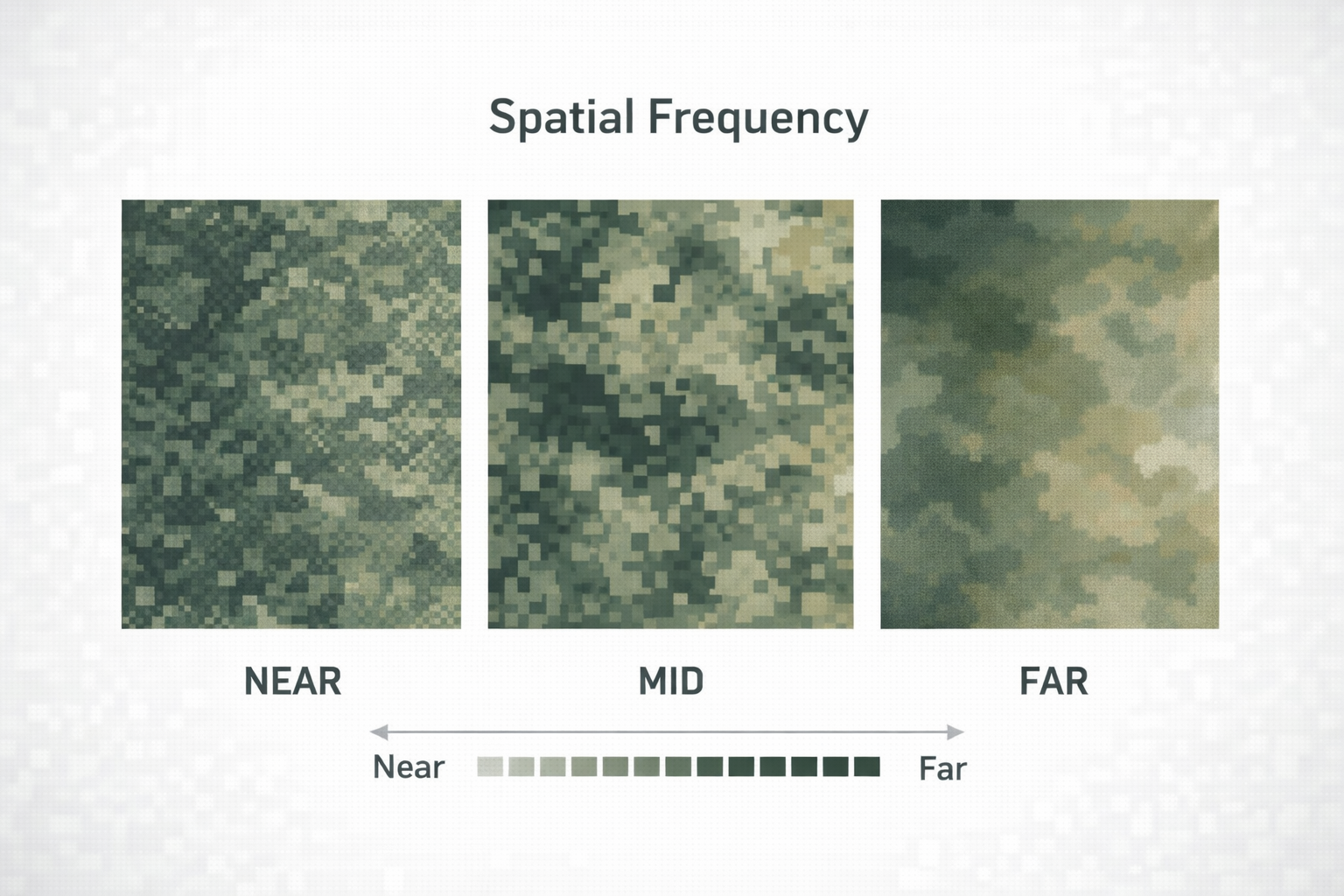
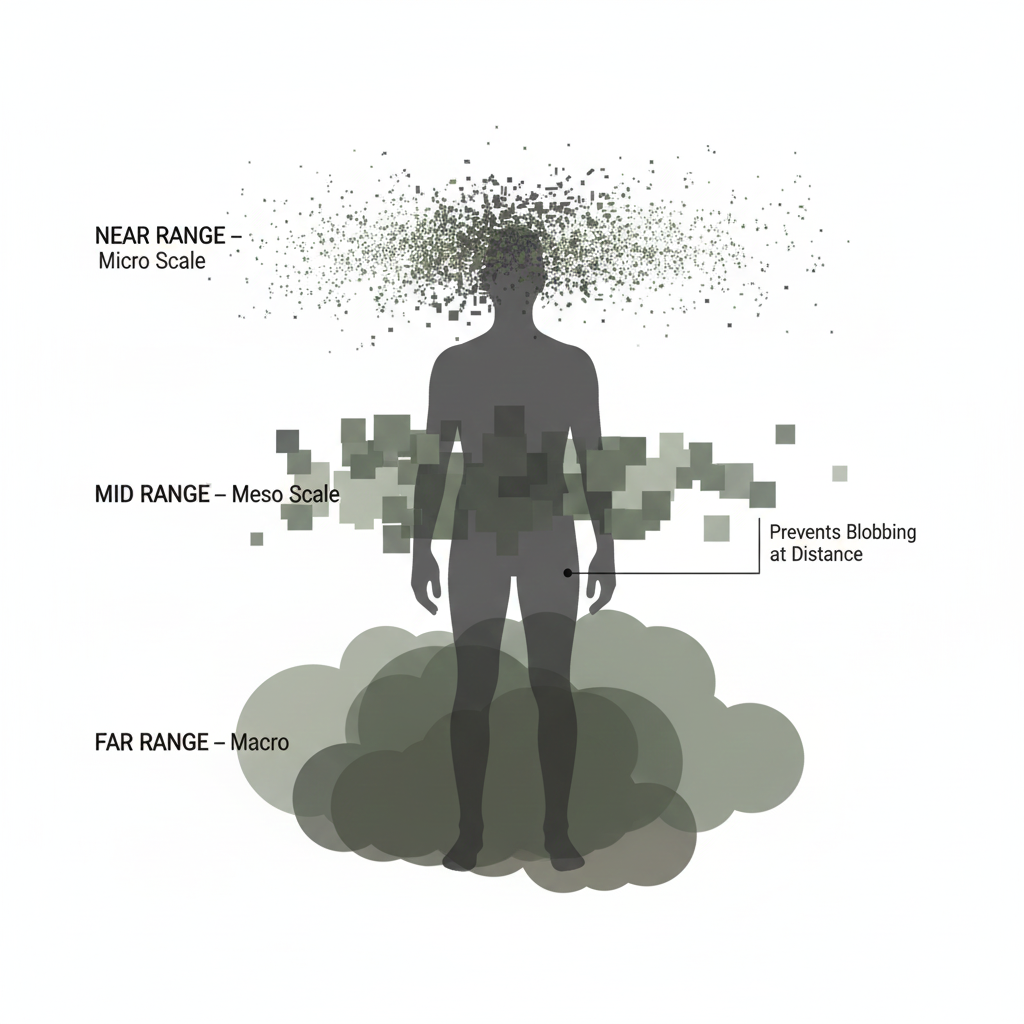
Small square pixels are used to replicate the fine visual complexity of the environment at close range—such as rocks, irregular ground textures, gaps between vegetation, or soil patterns. At this distance, these micro-scale elements help the camouflage blend into the immediate surface detail that the human eye expects to see nearby.
Macro-Level (Pixel Clusters):
Larger groupings of pixels, formed by clustering smaller pixels together, create what is known as the dithering effect. At medium to long distances, these clusters function to obscure the human outline (contour obliteration). Their structure is intentionally designed to resemble the apparent randomness of the smaller pixel elements. Through this dithering effect, the brain perceptually merges these pixel clusters into larger “color masses,” which helps sever the visual separation between the soldier’s silhouette and the surrounding terrain, allowing the camouflage to integrate more effectively with the environment.
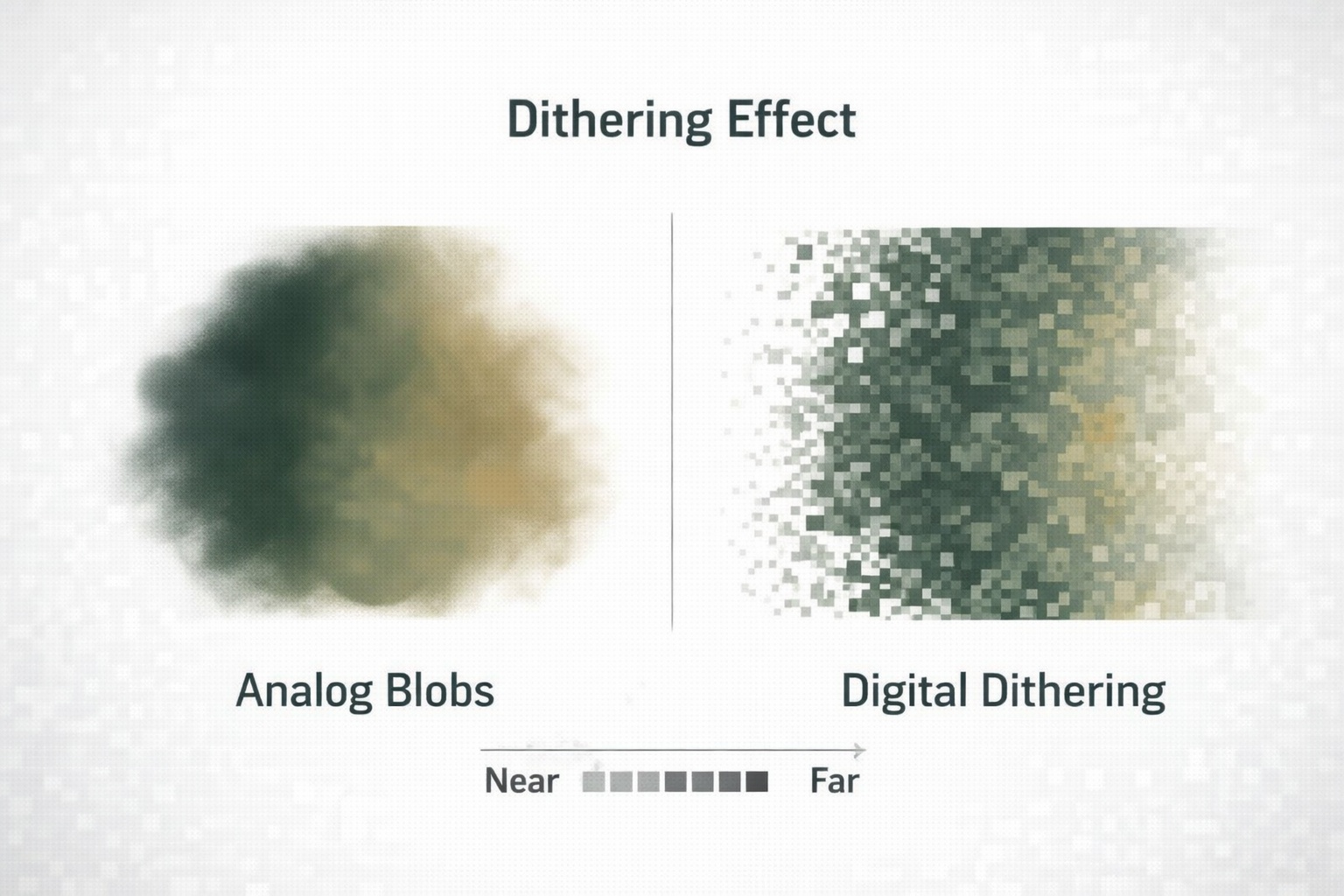
For this reason, Spatial Frequency Control must work in harmony with Disruptive Coloration. If pixel scaling is applied without appropriate color logic, the camouflage fails to break up the human form effectively. A well-known example of this mismatch is the U.S. Universal Camouflage Pattern (UCP), where digital pattern structure was used without sufficient terrain-appropriate color contrast—resulting in poor concealment performance despite its modern appearance.
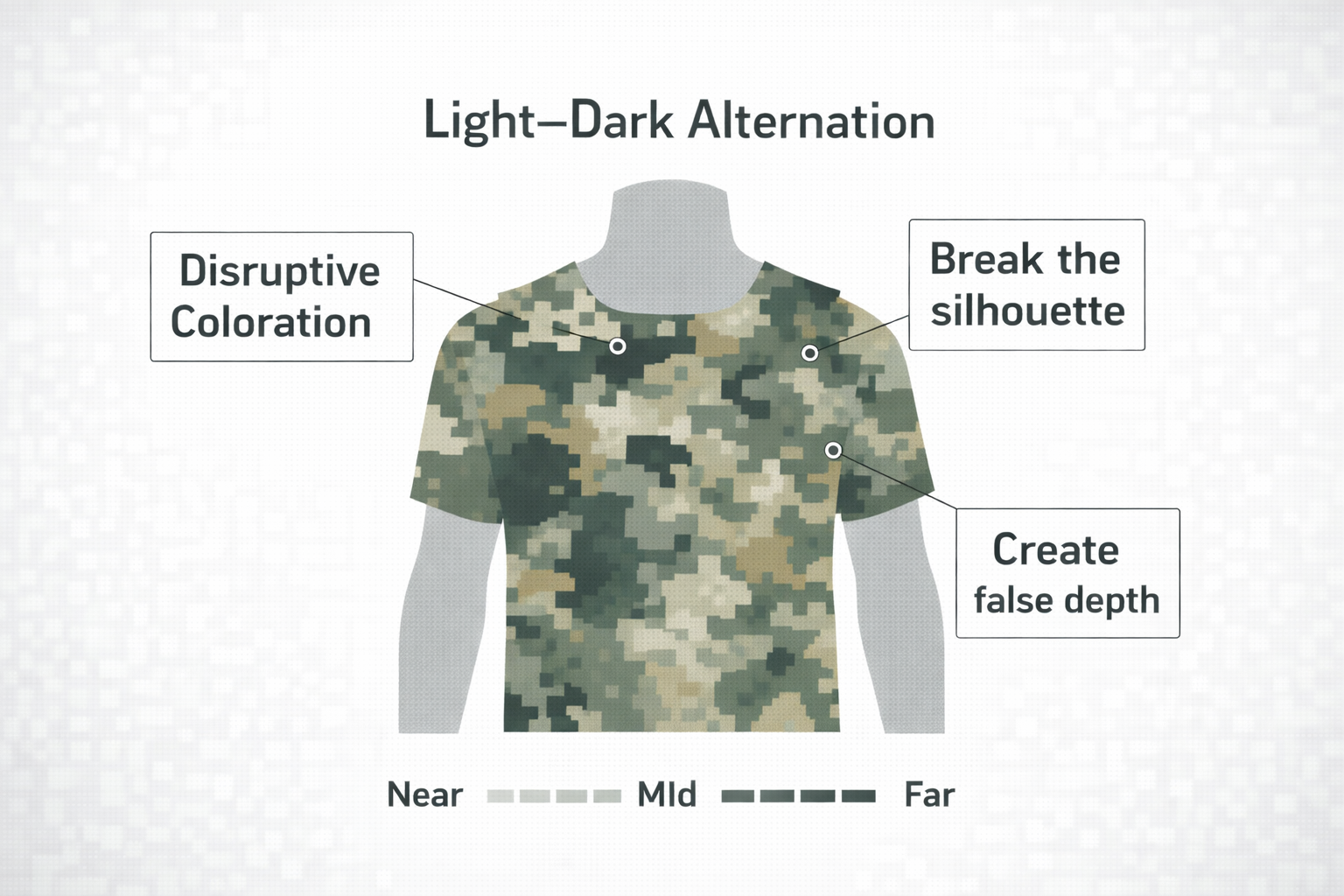
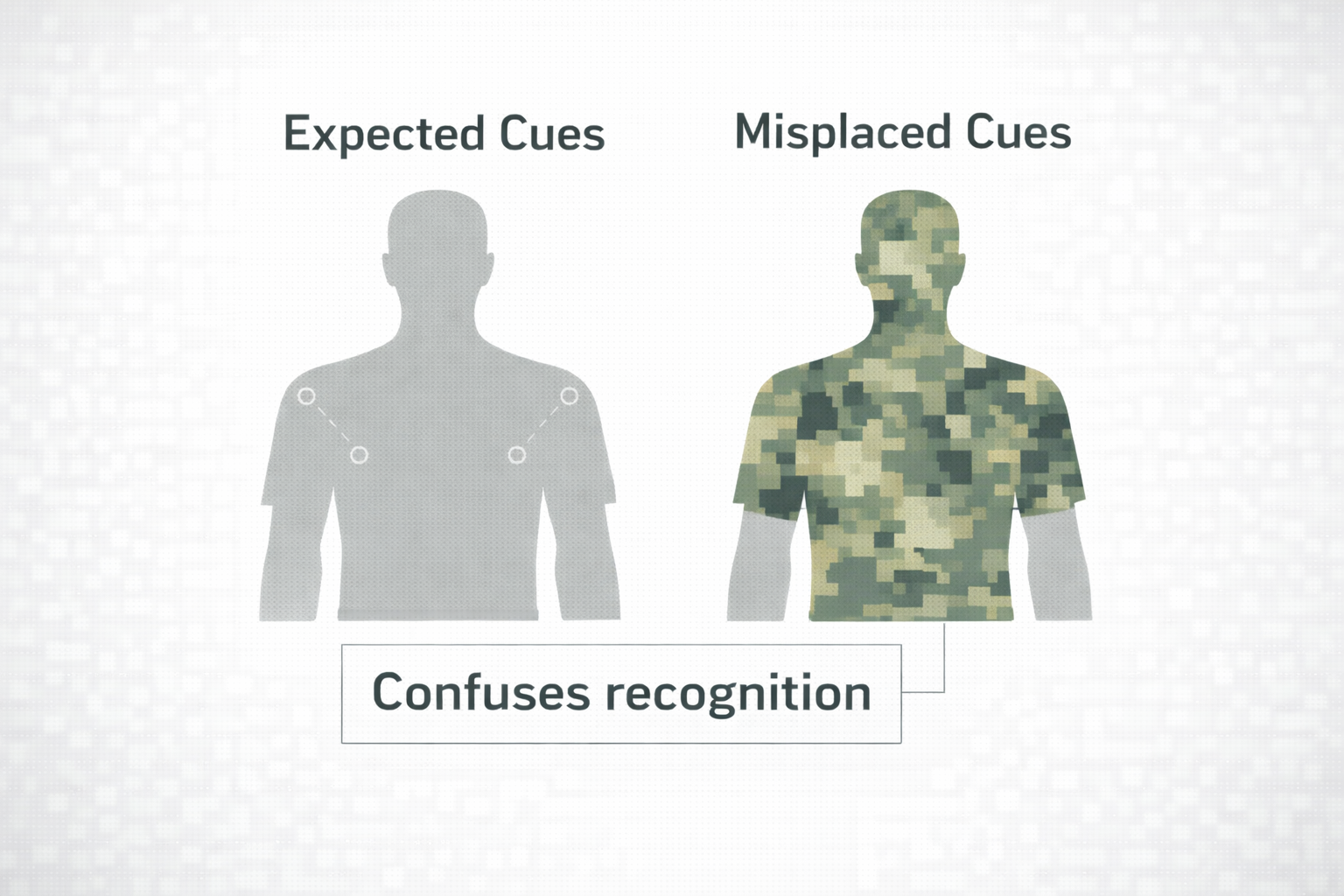
3.2 Placing colors in ways that contradict the brain’s expectations, particularly in locations that conflict with normal human anatomical structure
3.3 Reducing the continuity of the human form without the need to completely conceal it
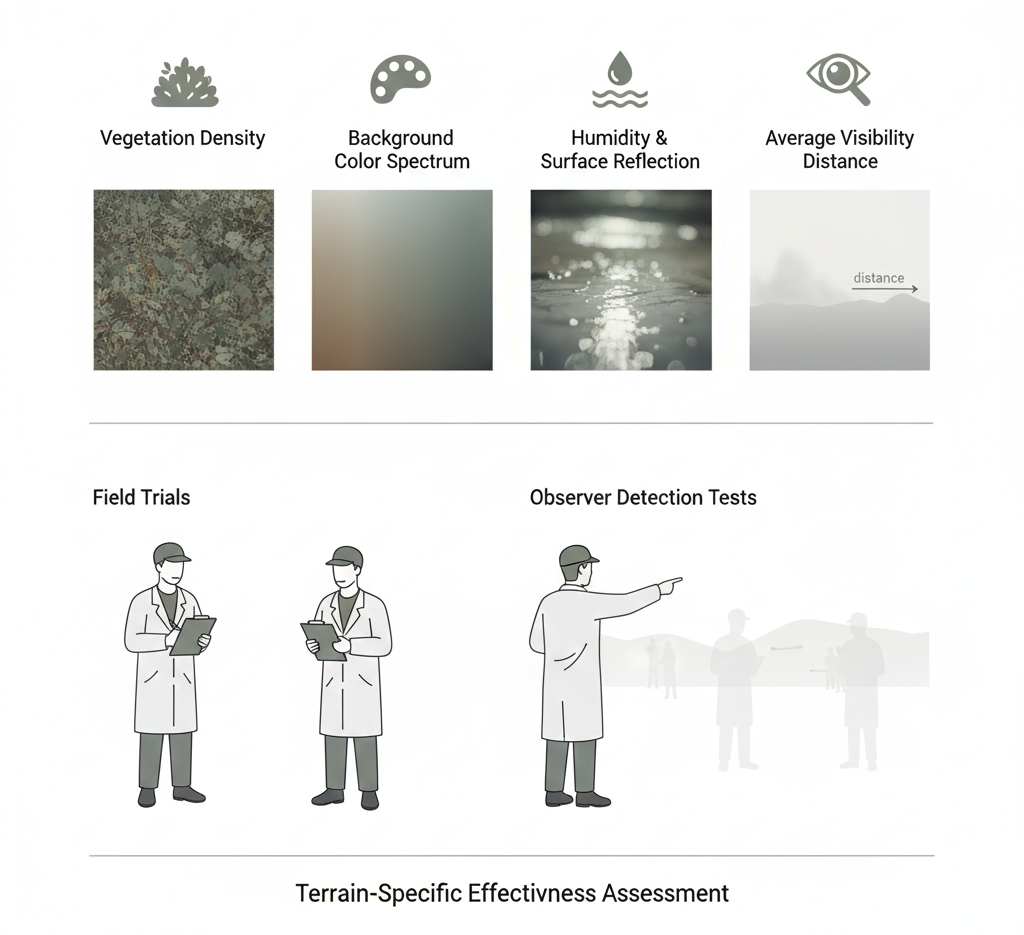
At the same time, the chosen color palette must be designed in accordance with the characteristics of the terrain and real lighting conditions. Research shows that factors which significantly influence camouflage effectiveness include vegetation density, background color spectrum, humidity and surface reflectivity, and the average visibility distance within a given environment. To evaluate these factors, testing is conducted through field trials under real-world conditions and observer detection tests, comparing different camouflage patterns to measure which patterns are detected more slowly or with greater difficulty at various distances. This process allows for an objective assessment of terrain-specific effectiveness.
Together, these mechanisms prevent the human brain from completing target recognition (No Recognition – No Identification) within the limited time available for tactical decision-making. This integrated approach can be described as a “Cognitive Jamming System”—a camouflage system grounded in scientific logic rather than visual imitation. As a result, effective camouflage does not need to look like nature; it needs to prevent the brain from conclusively determining what it is seeing.
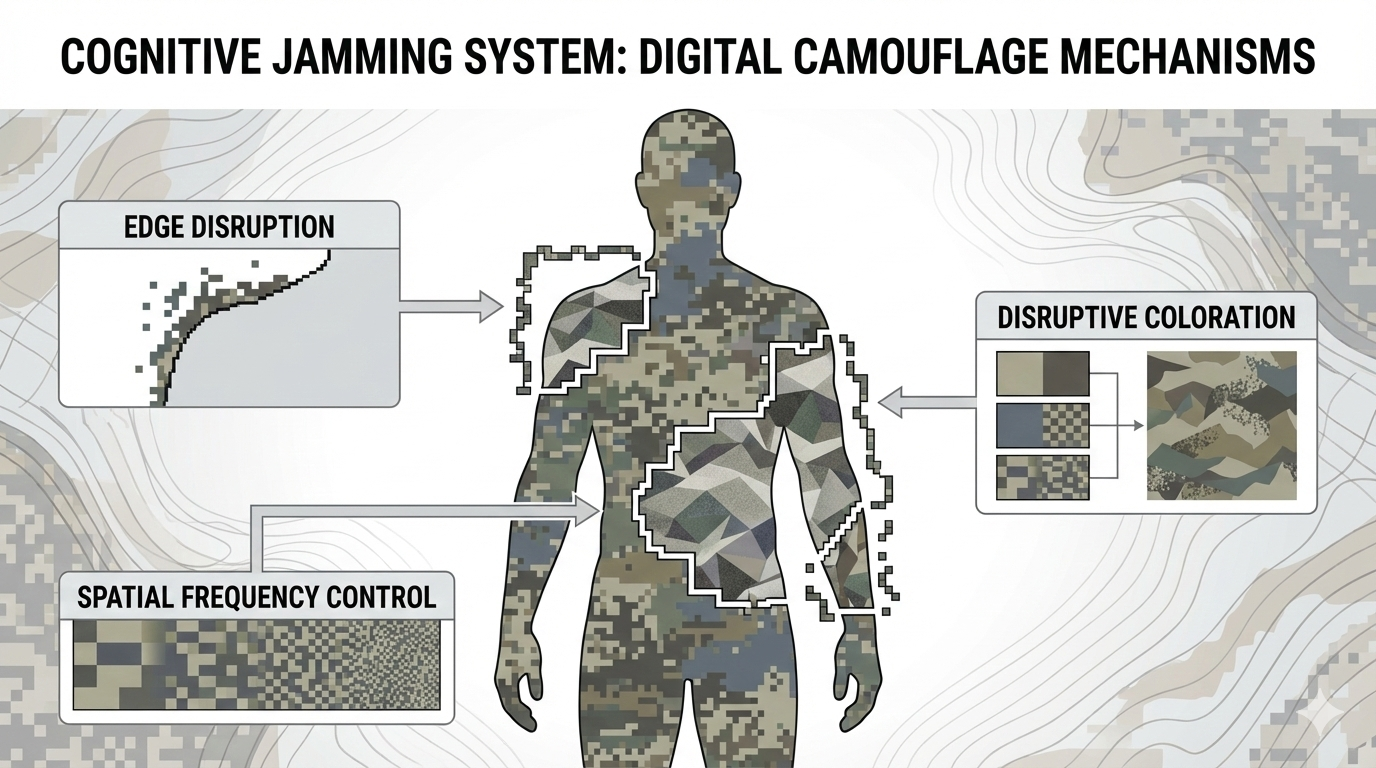
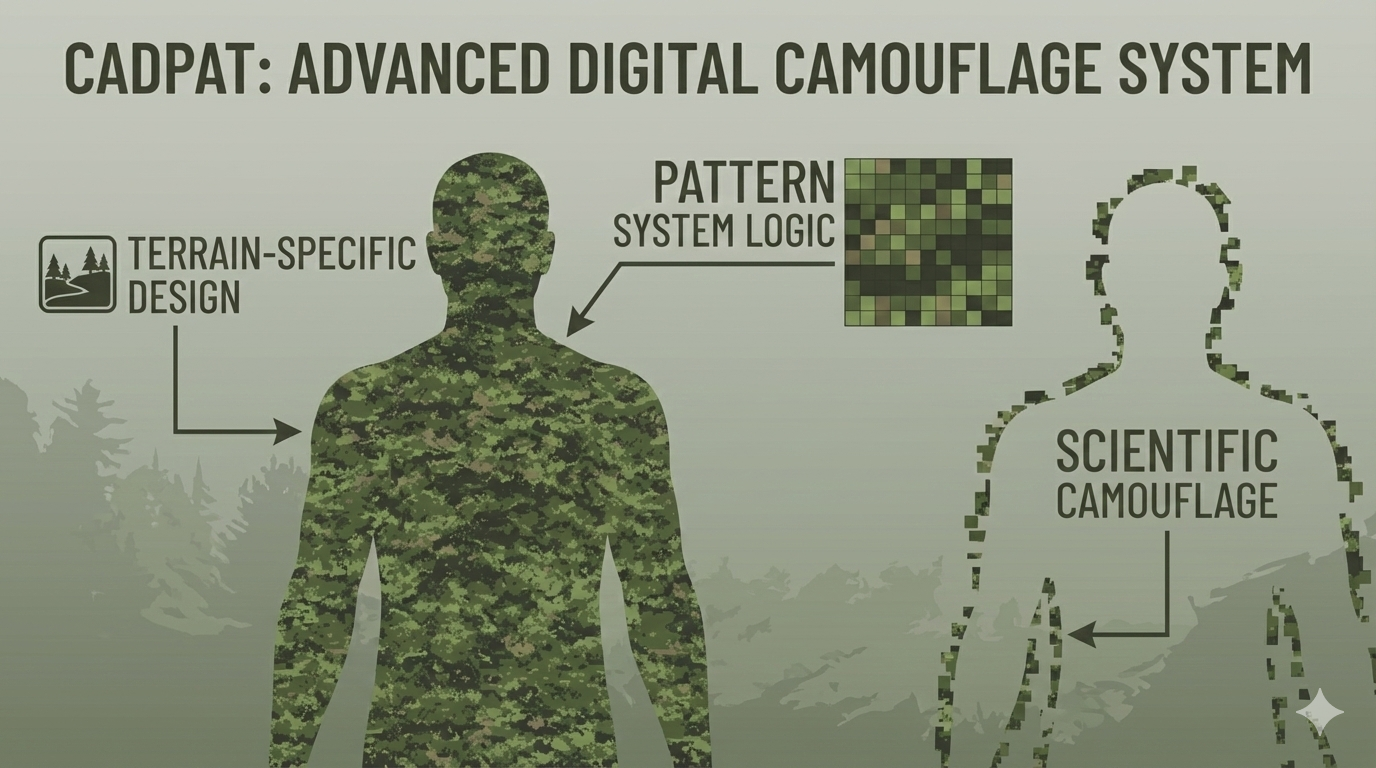
The core rule of CADPAT lies in the integration of Edge Disruption, Spatial Frequency Control, and Disruptive Coloration. This includes designs that deliberately work against natural human anatomy: placing light and shadow where they are not expected, avoiding symmetry, and consistently breaking the recognizable human signature. This principle is known as Anatomical Misplacement—the intentional misalignment of visual cues associated with the human body.
Because CADPAT was conceived as a system rather than a static pattern, it can be customized and localized to different environments without compromising its foundational principles.
Why the United States Marine Corps (USMC) chose CADPAT as the foundation for MARPAT
Canada’s success was carried forward by the United States Marine Corps (USMC), which developed its own version known as MARPAT (Marine Pattern). MARPAT was officially adopted in the early 2000s and has since become both a symbol and a defining identity of the U.S. Marine Corps. Its long-term operational use further reinforced the superior effectiveness of pixel-based camouflage patterns.

Before CADPAT, most camouflage patterns were developed through field observation and artistic conjecture. CADPAT was the first camouflage pattern in the world to be designed on the basis of empirical data and fractal mathematics.
The Canadian Armed Forces conducted rigorous and objective testing, which demonstrated that CADPAT significantly outperformed all traditional camouflage patterns—including U.S. Woodland and 3-Color Desert—in reducing the Probability of Detection (Pd). For the USMC, whose doctrine emphasizes excellence in amphibious and expeditionary operations, choosing a proven scientific solution as a starting point was essential.
CADPAT was the first camouflage pattern to truly address the problem of Human Visual Perception, effectively reducing Detection, Recognition, and Identification. It achieves this by integrating multiple principles simultaneously:
– Edge Disruption, breaking continuous outlines such as shoulders, arms, and the torso at multiple levels;
– Spatial Frequency Control, using pixels to create a dithering effect that allows the pattern to blend with the background at medium and long ranges (macro-level concealment), something analog patterns cannot achieve;
– Disruptive Coloration, with color elements designed to perform effectively in the Near-Infrared (NIR) spectrum—an increasingly critical factor for survivability on the modern battlefield—while also alternating light and dark tones and placing pattern elements in deliberately anatomically incorrect positions to confuse human recognition.
Together, these factors made CADPAT not merely a new look, but a fundamentally superior camouflage system worthy of adoption and adaptation by the USMC.
This point is critical. The USMC did not want Canada’s camouflage pattern itself; it wanted the pattern logic behind it—a system that could be adapted and localized. CADPAT possesses this key quality: its pixel structure is systemic, not tied to any single color scheme, and its color palette can be modified without compromising the disruptive logic that breaks up the human silhouette.
.
4. Doctrinal and identity-driven considerations
While scientific performance was the primary factor, doctrinal reasons were equally important. The USMC required a camouflage pattern with a distinct identity, clearly differentiated from the U.S. Army and the U.S. Air Force. By adopting a digital camouflage pattern that was further refined to subtly incorporate the USMC emblem—the Eagle, Globe, and Anchor—within the pattern, the Corps created a form of strategic differentiation that reinforced its unique identity as a fighting force.
By building directly on CADPAT, the Marine Corps was able to develop MARPAT through a clear process of extracting the core logic, adjusting colors, refining scale, and embedding unit identity, as outlined below:
1. Accepting the CADPAT logic
Disruptive Coloration
Edge Disruption
Spatial Frequency Control
2. Modifying the color palette
Colors were adjusted to match the terrain spectrum of actual operational environments, resulting in both Woodland MARPAT and Desert MARPAT, tailored to where the USMC operates in reality.
3. Adjusting density and contrast
These parameters were refined to suit local lighting conditions and vegetation density in the operational area.
4. Embedding unit identity into the camouflage
The EGA symbol (Eagle, Globe, and Anchor) was subtly integrated into the pattern to clearly assert: “This is USMC camouflage.”
Its distinction was built upon the same underlying logic, consistently applied.
As emphasized throughout, high-performance digital camouflage is achieved through the balanced integration of Edge Disruption, Spatial Frequency Control, and Disruptive Coloration. One of the most critical aspects of Disruptive Coloration is that color selection must always correspond to terrain characteristics and real lighting conditions, in order to achieve true terrain-specific effectiveness.
This is precisely why the UCP (Universal Camouflage Pattern)—often mistakenly referred to as ACU—serves as an important case study. Despite adopting a CADPAT-derived pattern system, UCP ultimately failed. The core reason was not the digital concept itself, but the application of scientific principles without sufficiently rigorous tactical analysis, leading to operational failure. UCP’s use of light and dark gray tones, intended as a neutral solution for all environments, exposed a fundamental error in color calibration—one that ignored the basic scientific principles of camouflage, particularly contrast and color matching.
This lesson underscores a critical truth: effective camouflage must be specifically designed for each terrain type, rather than attempting to function as a universal solution.

“Designing camouflage that is disconnected from real operational environments unnecessarily reduces troop survivability.”
In summary, Digital Camouflage is not a universal solution.
Even digital patterns can fail if they are not genuinely tied to the terrain they are meant to operate in.
.
Thai Digital Camouflage for Tropical Forest Environments
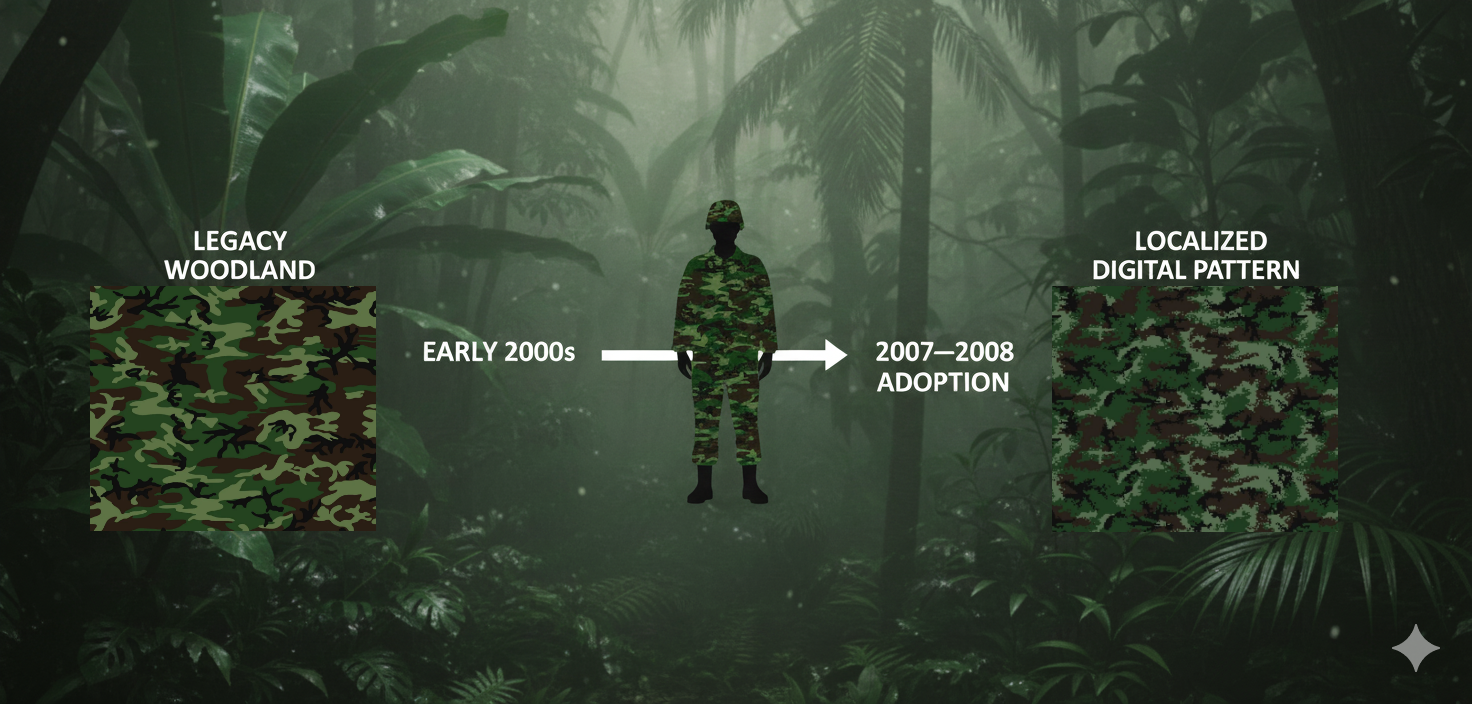
During the early 2000s, as Western militaries were entering the era of digital camouflage, the Royal Thai Armed Forces likewise recognized the need to elevate their camouflage standards to international levels. Changes in the operational environment and the demand for modernization became key drivers pushing Thailand to study and adopt digital camouflage concepts, adapting them to create patterns suited to its own requirements.
This approach involved adopting the core digital camouflage concept and localizing it to match the color tones and environmental characteristics of tropical terrain. Thailand officially introduced digital camouflage around 2007–2008, replacing the older woodland patterns previously used by the Royal Thai Army. Since then, these patterns have undergone continuous refinement and development, evolving over time to improve their effectiveness in Thailand’s unique operational environment.
Armatha Defense, a company specializing in tactical apparel and equipment, stepped in by applying a Pattern System–based approach to further advance camouflage design. This involved refining the color palette to better match Thailand’s real-world lighting conditions, color spectrum, and terrain characteristics, while integrating the specific operational requirements of the Royal Thai Armed Forces.
The result is a camouflage solution designed to achieve higher operational effectiveness, grounded not only in visual appearance but in systematic, environment-driven camouflage logic.
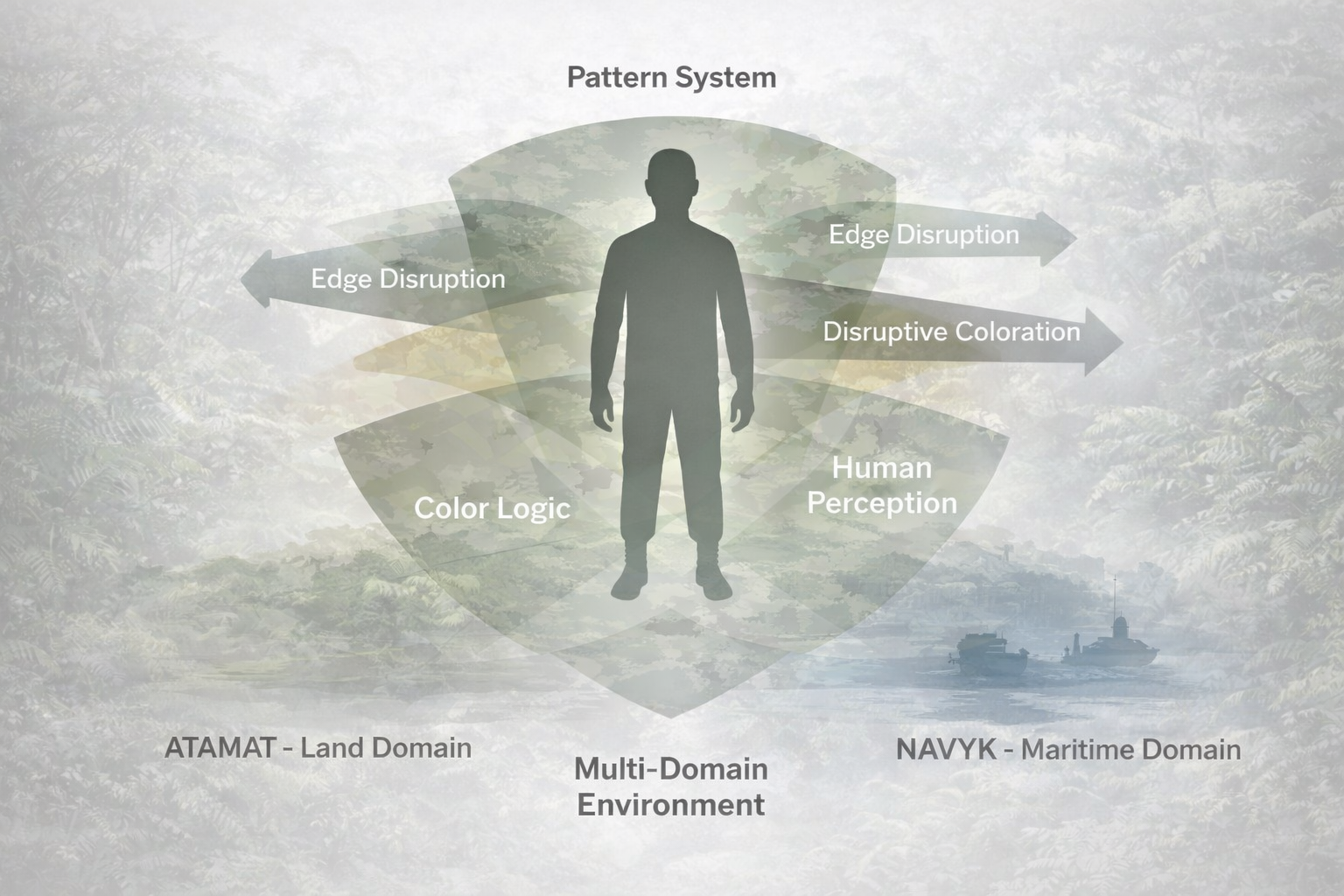
Armatha Defense conducted research and development of digital camouflage for the Thai Armed Forces by adopting the CADPAT Pattern System as its foundational logic. This framework integrates Edge Disruption, Spatial Frequency Control, and Disruptive Coloration to deliberately fragment the human silhouette, prevent continuous outlines, and break up the shoulder line, limbs, and torso into discontinuous segments—thereby reducing recognizable human form signatures.
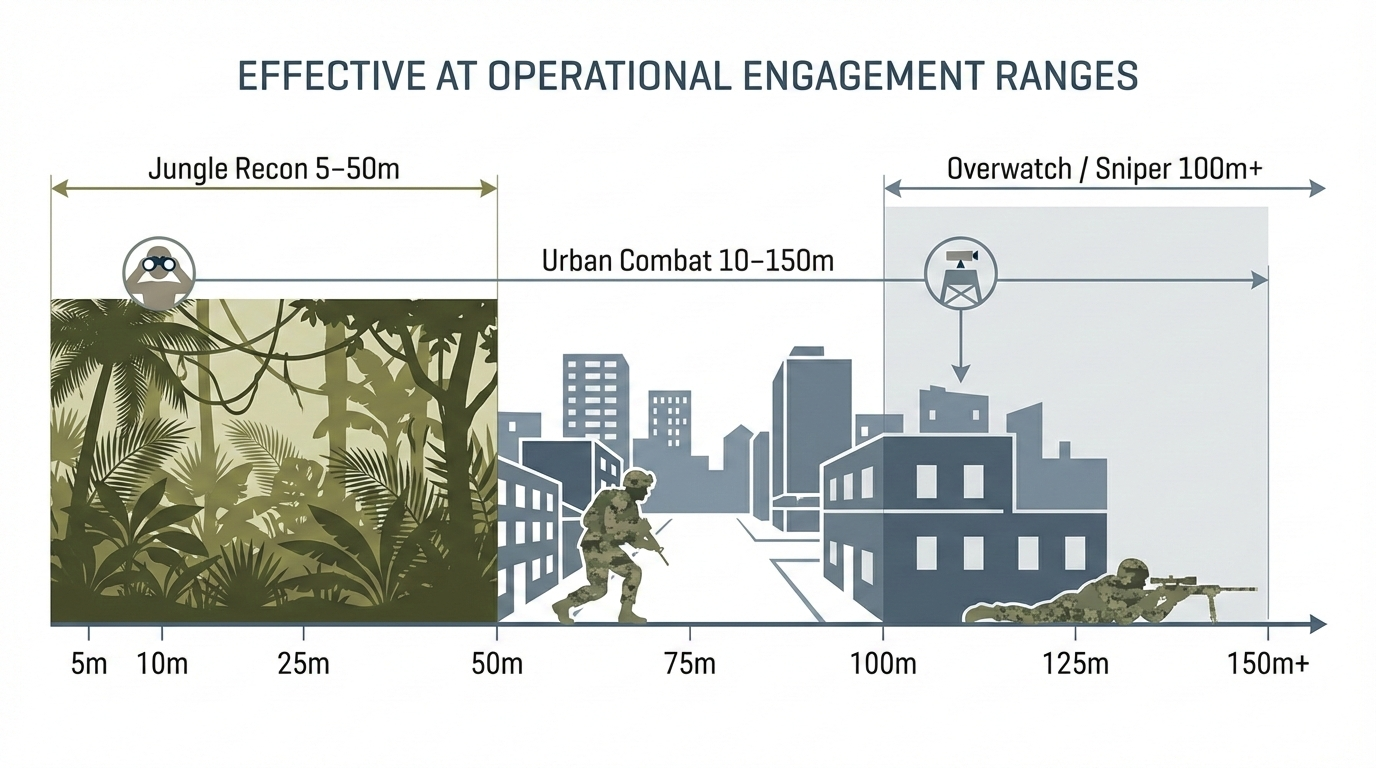
The pixel structure is deployed across multiple scales and sizes to provide effective concealment at close, medium, and long engagement ranges. Through deliberate color placement—alternating lighter and darker tones—the body is perceived as visually “broken apart,” reducing contour continuity and delaying the brain’s ability to assemble a coherent human shape. The result is a camouflage system designed to prevent rapid target recognition within the critical time window required for tactical decision-making.
The color calibration of ATAMAT and NAVYK was deliberately adjusted to remain close to the tones currently used by the Royal Thai Army and the Royal Thai Navy / Marine Corps.
This approach ensures visual continuity and minimizes a sense of unfamiliarity, while refinement efforts focus on increasing intra-pixel contrast (High Contrast) to enhance contour obliteration under a structured Pattern System—all while preserving the core service color codes.
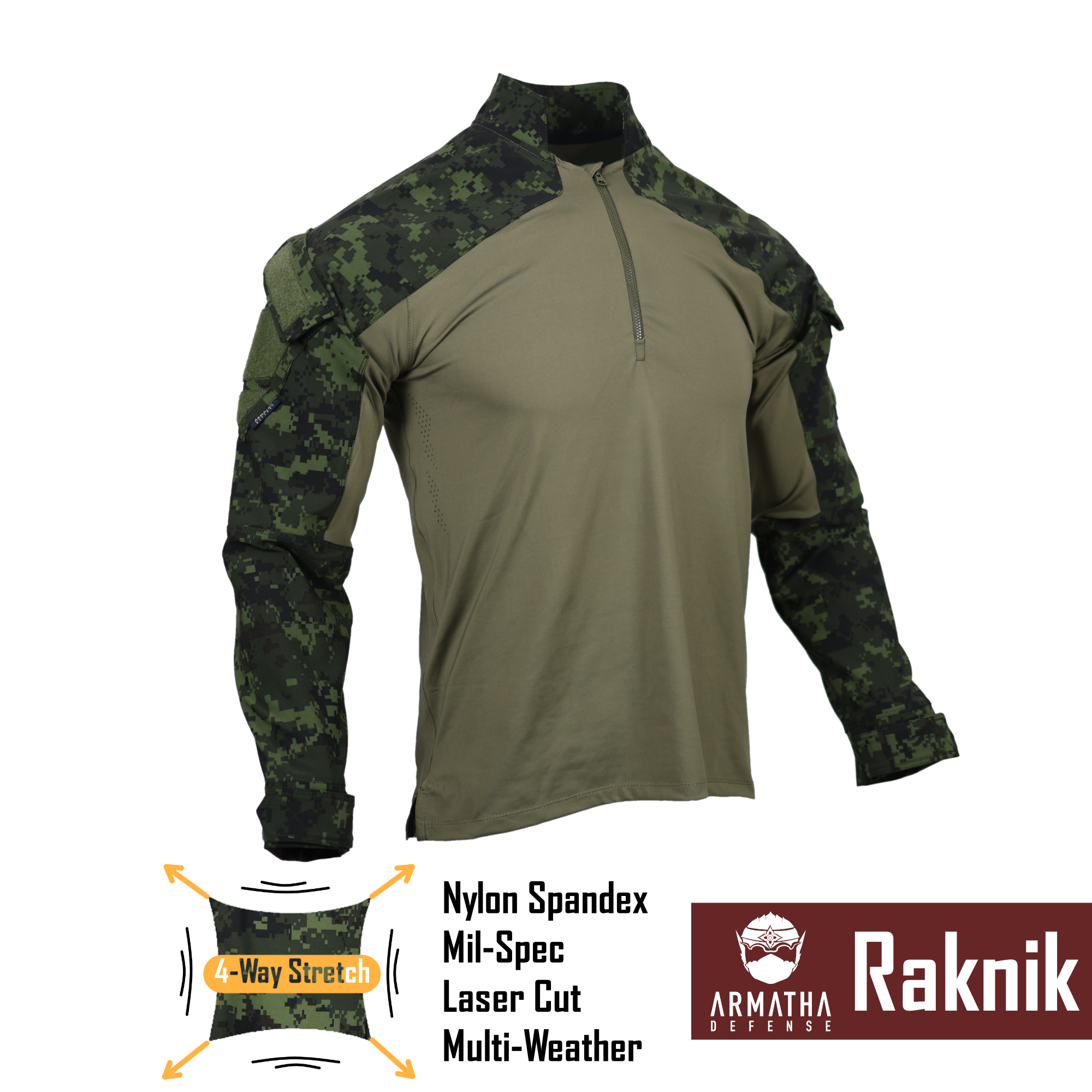
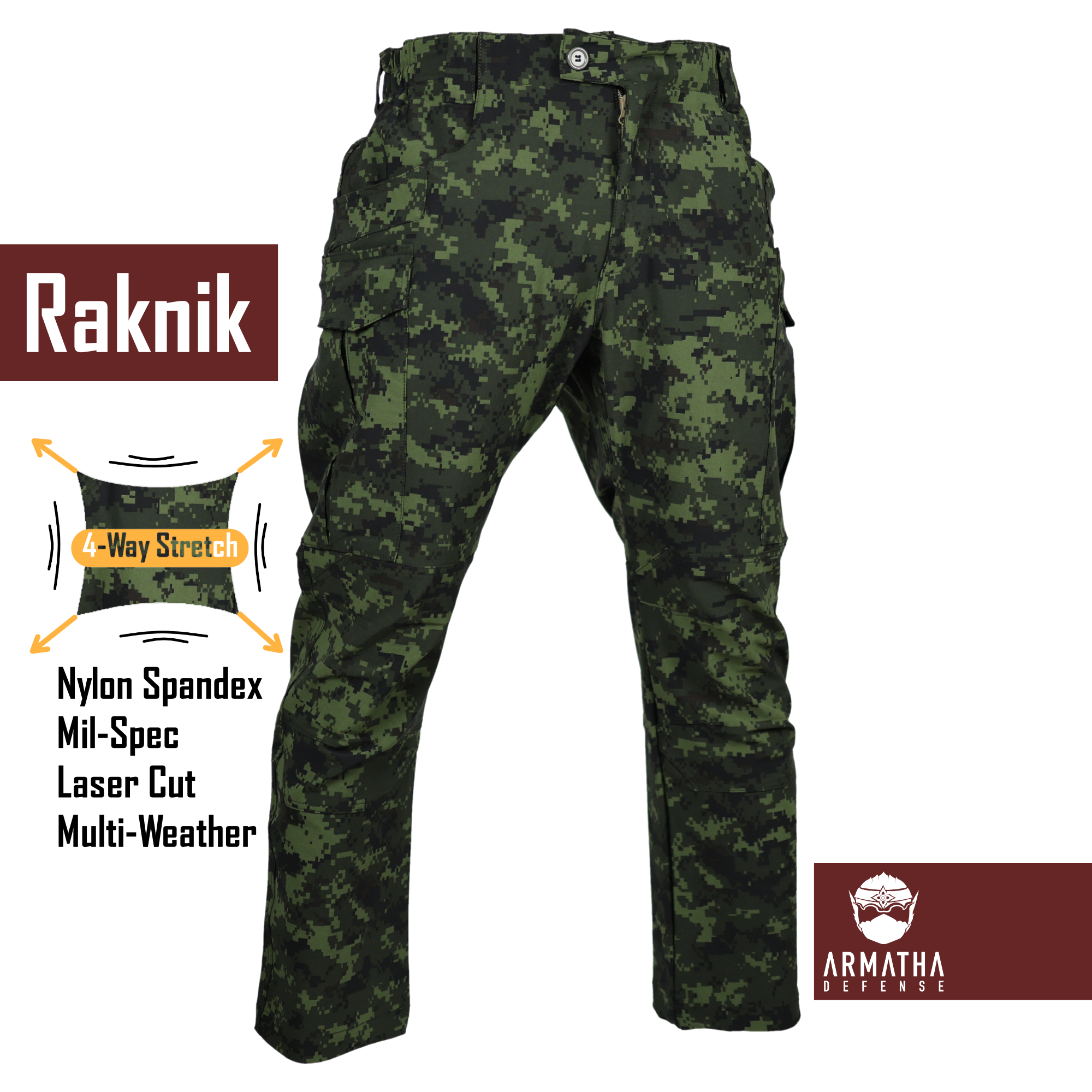
ATAMAT derives its name from Atamat, an ancient combat unit renowned for reconnaissance and assault operations, reflecting aggressive, rapid, and decisive missions. Linguistically rooted in Pali/Sanskrit, Atha means “superior” or “exalted,” and Mas means “gold.” Combined, ATAMAT conveys the meaning “more precious than gold.”
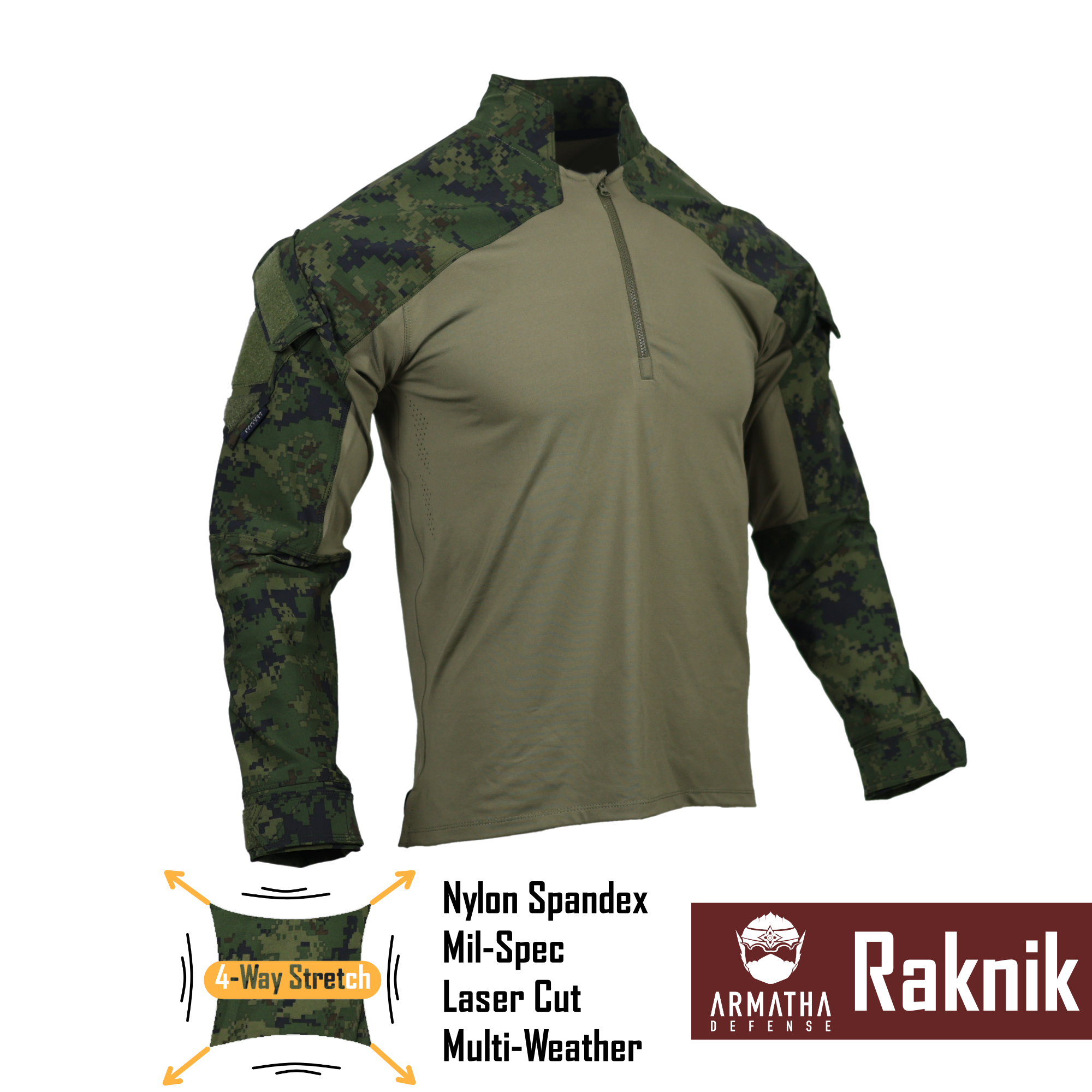
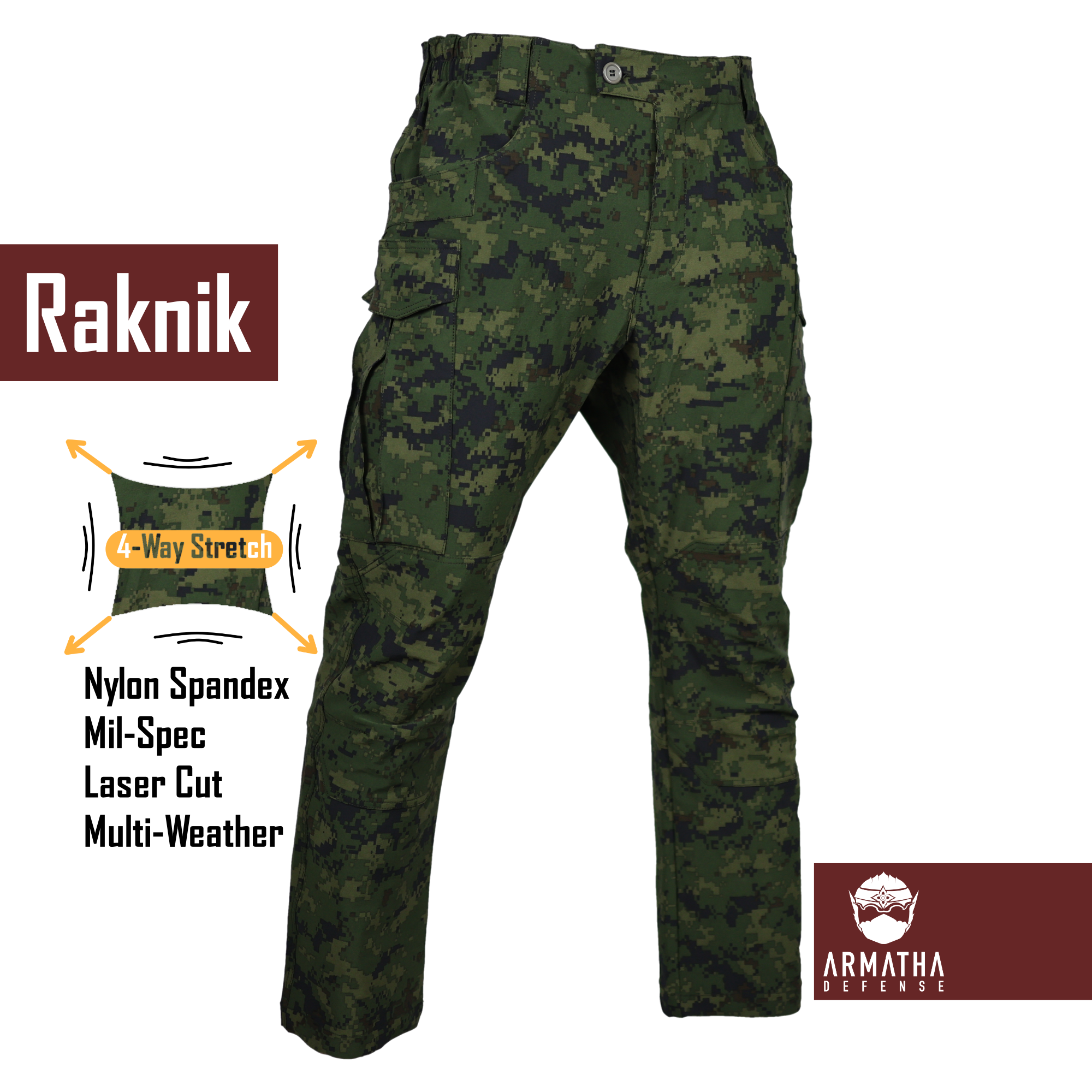
NAVYK is a portmanteau of Navy and Navik—a term in English and Sanskrit meaning “seafarer” or “marine.” The name underscores the historical and operational context in which the Royal Thai Navy and Marine Corps operate as an Integrated Naval Force, emphasizing shared identity and joint responsibility in defending maritime and coastal sovereignty.
The digital camouflage system developed by Armatha Defense addresses key shortcomings found in existing patterns:
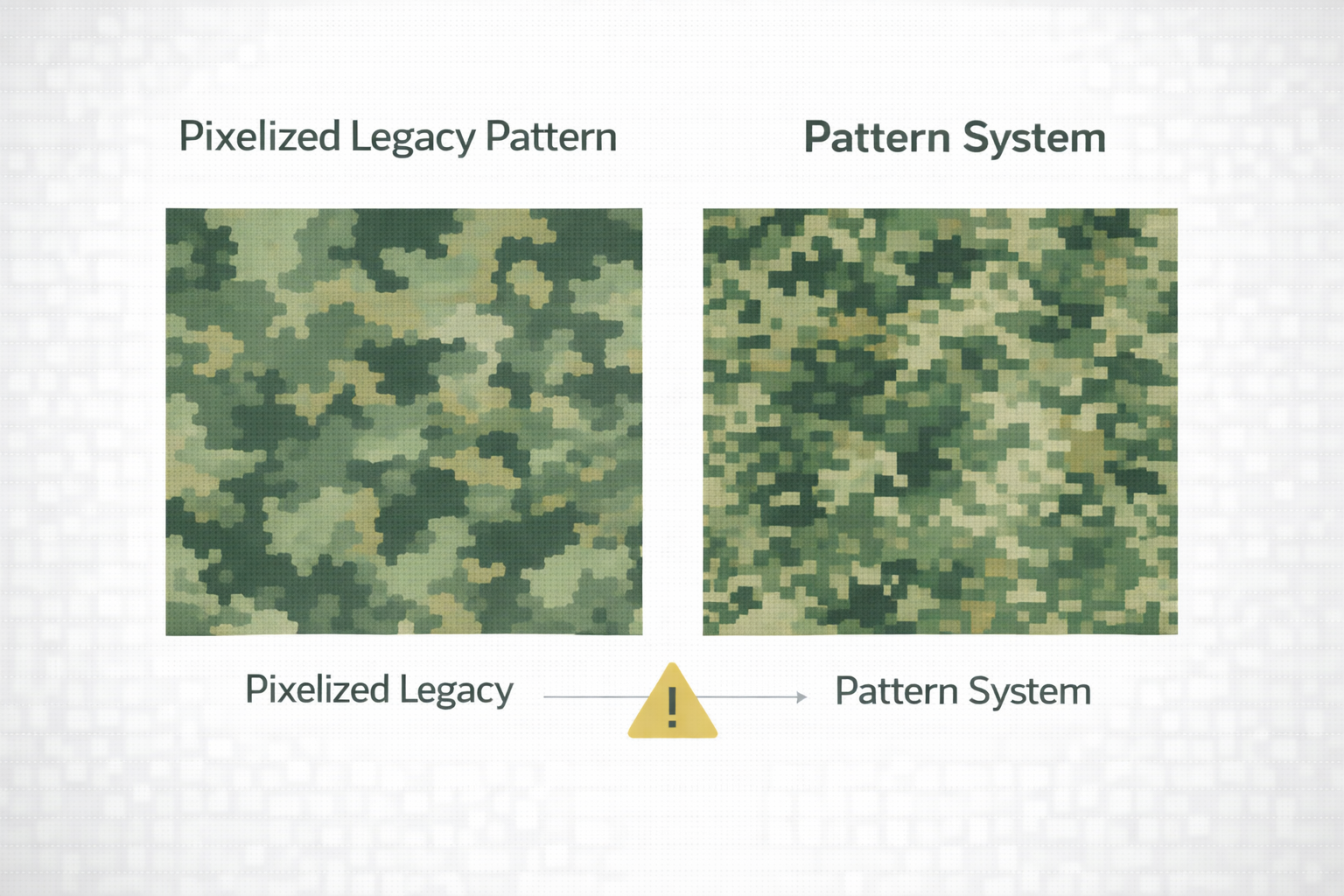
1. Pixelizing legacy patterns often converts rounded color blobs into square ones while preserving the original massing. This results in continuous outlines and symmetry that the human brain readily recognizes.
In contrast, ATAMAT and NAVYK do not pixelize legacy designs. They employ a Pattern System based on fractal mathematics, engineered to re-randomize color distribution entirely, preventing repetitive clusters or recognizable masses.
In other words, the digital camouflage developed by Armatha Defense for Thai combat forces is far more granular and structurally complex than traditional patterns currently in service—designed not to reshape old forms, but to replace them with a system optimized to disrupt human perception at every scale.
When camouflage depends only on color matching, the result is often a soldier who appears as a single, uniform color mass—essentially a “green blob standing in the forest.” While the colors may match the environment, the human outline remains intact, making detection and recognition easy for the observer’s brain.
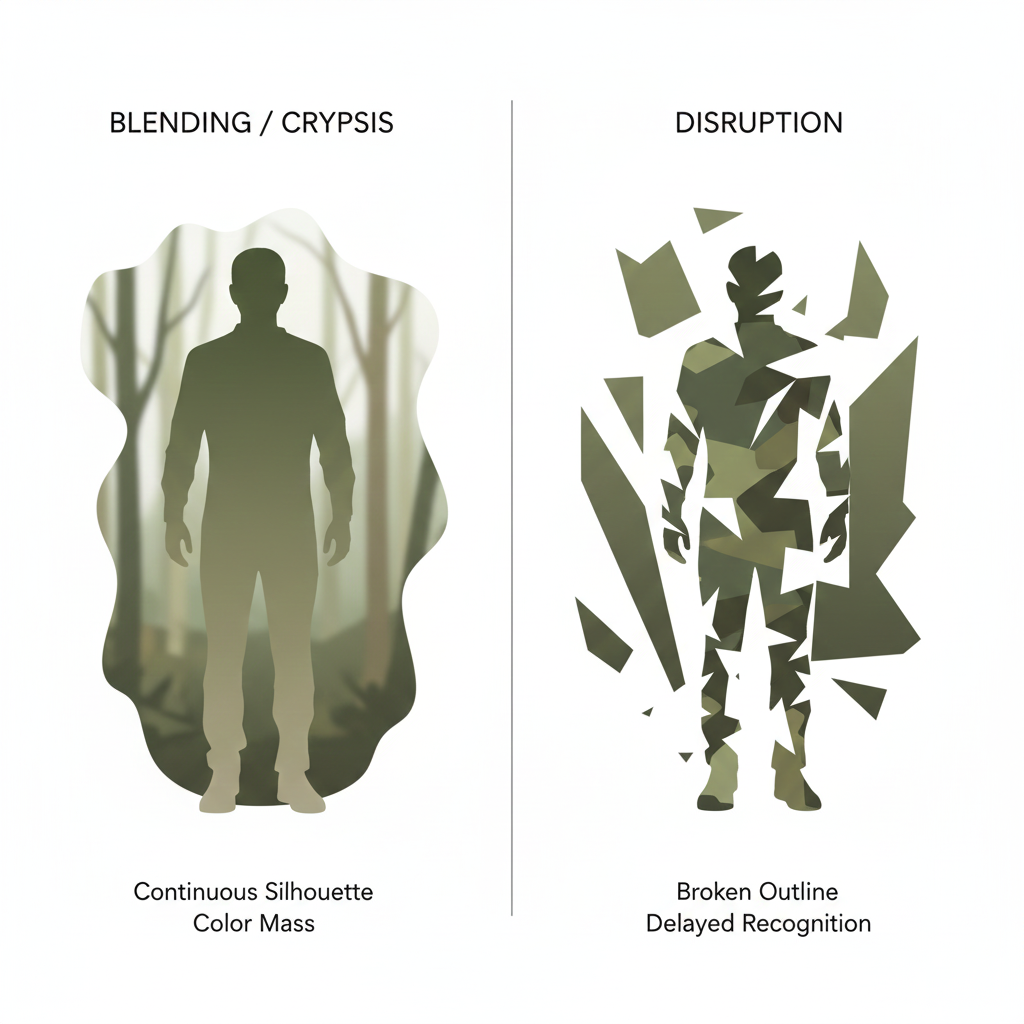
ATAMAT and NAVYK represent a step beyond simple blending and move toward the deliberate disruption of human perception (Disruptive Coloration). Instead of merely matching background colors, these patterns intentionally place light and dark pixels in strategic anatomical locations—such as the shoulders and elbows—to create perceived “gaps” or “voids” in the human form. The result is not that the body disappears, but that the observer’s brain cannot immediately conclude whether it is seeing a human figure or a natural object, such as a tree stump with light filtering through it.
3. From “Color-Based Camouflage” to a “Spatial Frequency System”
Most camouflage patterns operate at a single scale (Single Scale), meaning they are effective only at one viewing distance. ATAMAT and NAVYK address this limitation through Spatial Frequency Control.
Small pixels interfere with visual perception at close range.
Clusters of pixels break up the body’s outline at medium to long distances.
Larger color masses prevent the formation of dark, uniform blobs (Blobbing) when viewed from afar.
This multi-scale approach solves a common problem of older camouflage designs, which tend to collapse into a single, easily recognizable color mass when seen at longer distances—appearing as a “walking color blob” rather than a disrupted, ambiguous form.
Revisiting the core premise, effective camouflage does not make the human body disappear; rather, it prevents the brain from immediately assembling the body into a coherent whole. A well-designed digital camouflage is therefore a system engineered to fight human perception, not merely a pattern printed on fabric. ATAMAT and NAVYK apply this body of knowledge to the Thai operational context, built upon the same foundational logic as CADPAT and MARPAT.
The development of the ATAMAT and NAVYK camouflage systems by Armatha Defense provides tangible evidence of Thailand’s transition into a new era of military camouflage. The decision to adopt a Pattern System as the foundational blueprint—mirroring the approach taken by the USMC in developing MARPAT—represents a deliberate choice to rely on proven scientific doctrine shown to measurably enhance soldier survivability on the battlefield.
Ultimately, the true success lies in Armatha Defense’s ability to merge universal mathematical principles with specialized color calibration, while seamlessly integrating the specific operational requirements of the Thai armed forces. As a result, ATAMAT and NAVYK are more than uniforms; they are strategic combat assets that deliver enhanced concealment superiority for the Royal Thai Army and the Royal Thai Navy/Marine Corps across the full spectrum of operational environments.
When camouflage cannot perform at its full potential because the fabric itself does not support it, this is where Armatha Defense deliberately chose a different path. Rather than designing camouflage merely as a Pattern System, Armatha Defense also engineered a Material System to truly support the underlying logic of the camouflage. The goal is to demonstrate that Armatha Defense uniforms are not only designed to be less visible, but also to move with superiority—by integrating camouflage innovation (Visual Technology) with advanced material science (Material Science).
In modern battlefields, the disruption of perception provided by the ATAMAT and NAVYK digital camouflage systems serves as the first defensive layer, buying soldiers precious fractions of a second. But once contact begins, what ultimately preserves life is agility—the ability to move freely, respond instantly, and adapt under pressure.
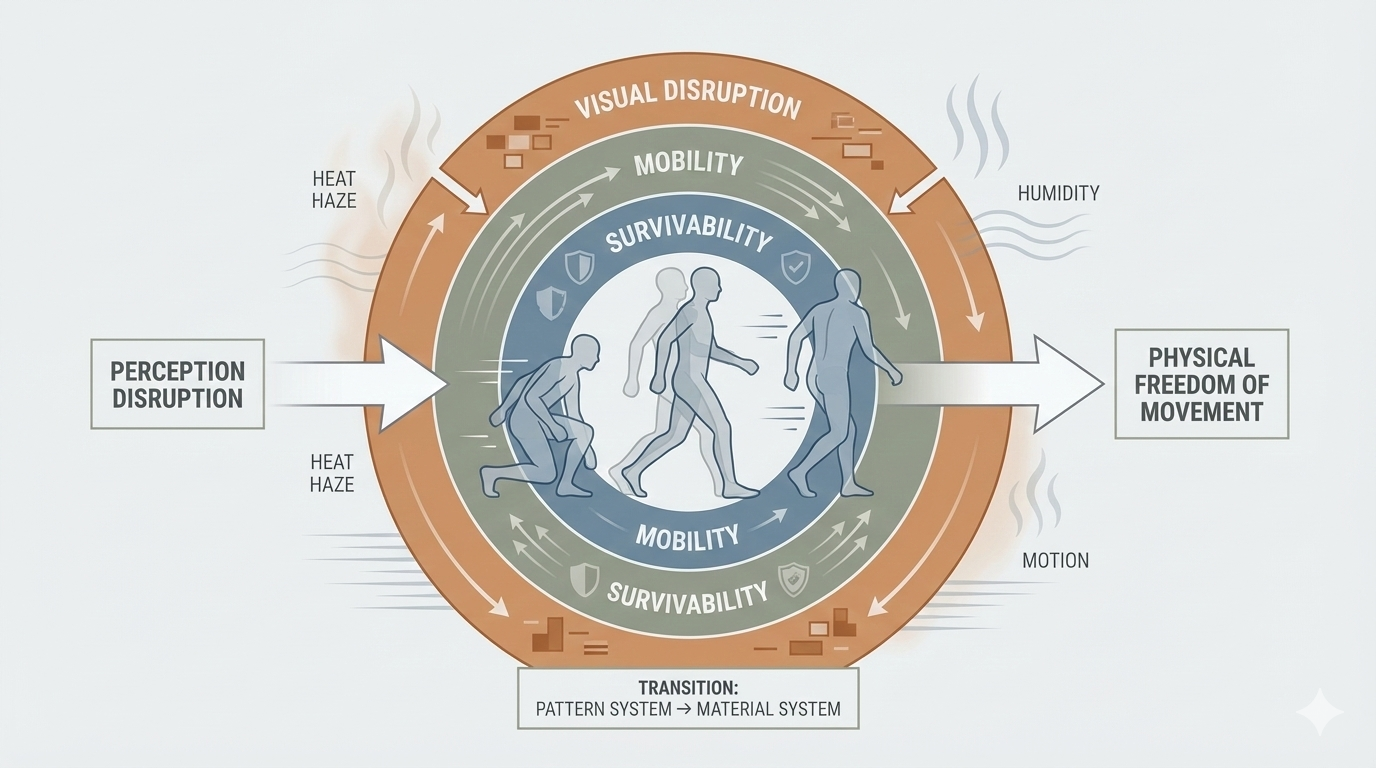
The primary structure is woven from high-density nylon for abrasion resistance and durability, combined with elastic spandex fibers that allow the fabric to respond to every movement—walking, jumping, running, or crawling. While conventional fabrics resist and pull against the body when lifting a leg or twisting the torso, this fabric stretches naturally in all four directions, moving in sync with the wearer. Its weight is precisely calculated: dense enough to provide protection, yet breathable enough to deliver excellent heat dissipation in hot climates.
You can read more about tactical apparel made with Nylon Spandex 4-way stretch in the related articles at the end of this piece.
Conclusion: The uniform is the soldier’s first piece of equipment.
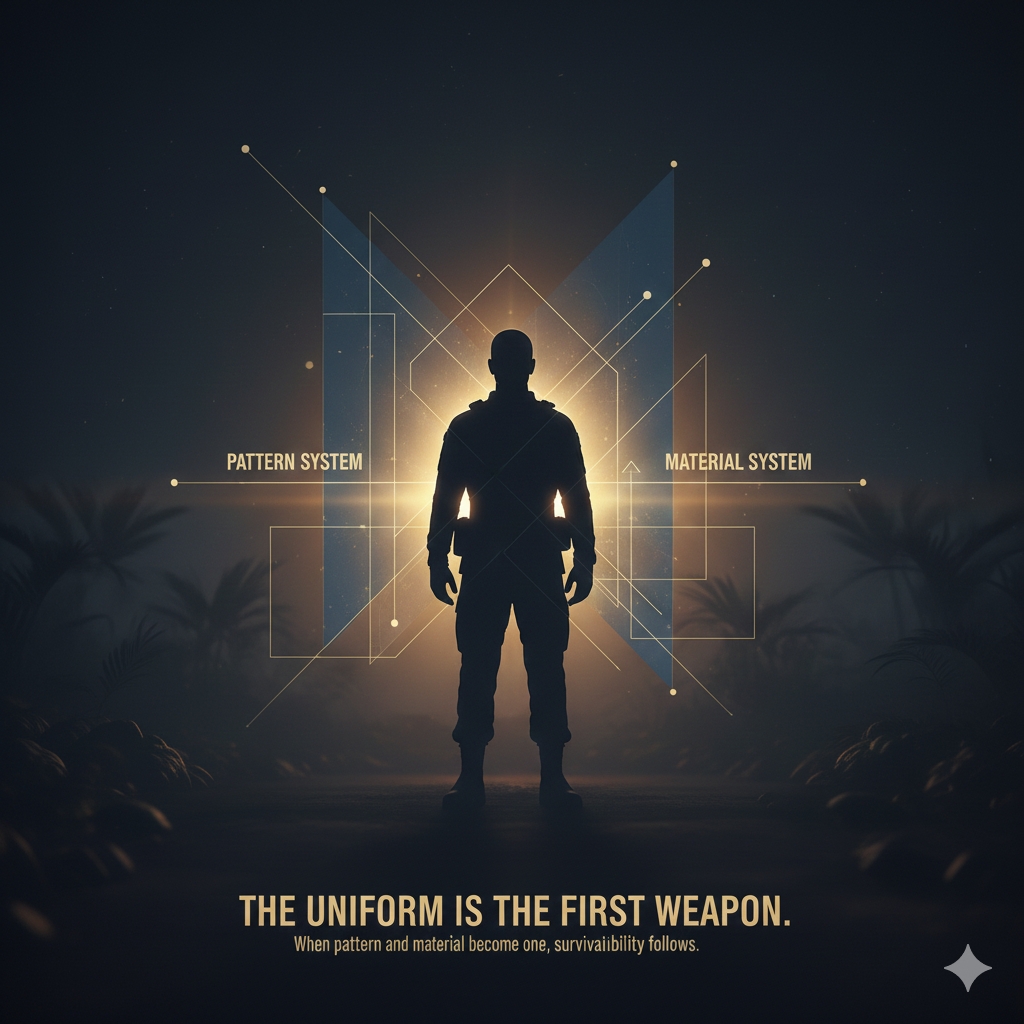
Adopting a Pattern System on the same level as CADPAT and MARPAT does not simply mean choosing a “pixel pattern.” It represents an acceptance that camouflage must be designed as a system—one grounded in logic, governed by principles, and operating within verifiable boundaries. ATAMAT and NAVYK are therefore not the result of pixelizing legacy patterns or modernizing color gradients, but outcomes of a design process that begins with a tactical question: in Thailand’s real operational environments, how does the human brain detect, recognize, and identify a target—and how can that process be disrupted systematically across all engagement ranges? The deliberate integration of Edge Disruption, Spatial Frequency Control, and Disruptive Coloration marks a shift from “blending into the environment” toward “disrupting the brain’s ability to assemble the human form,” aligning with the same standards used by the world’s leading military camouflage systems.
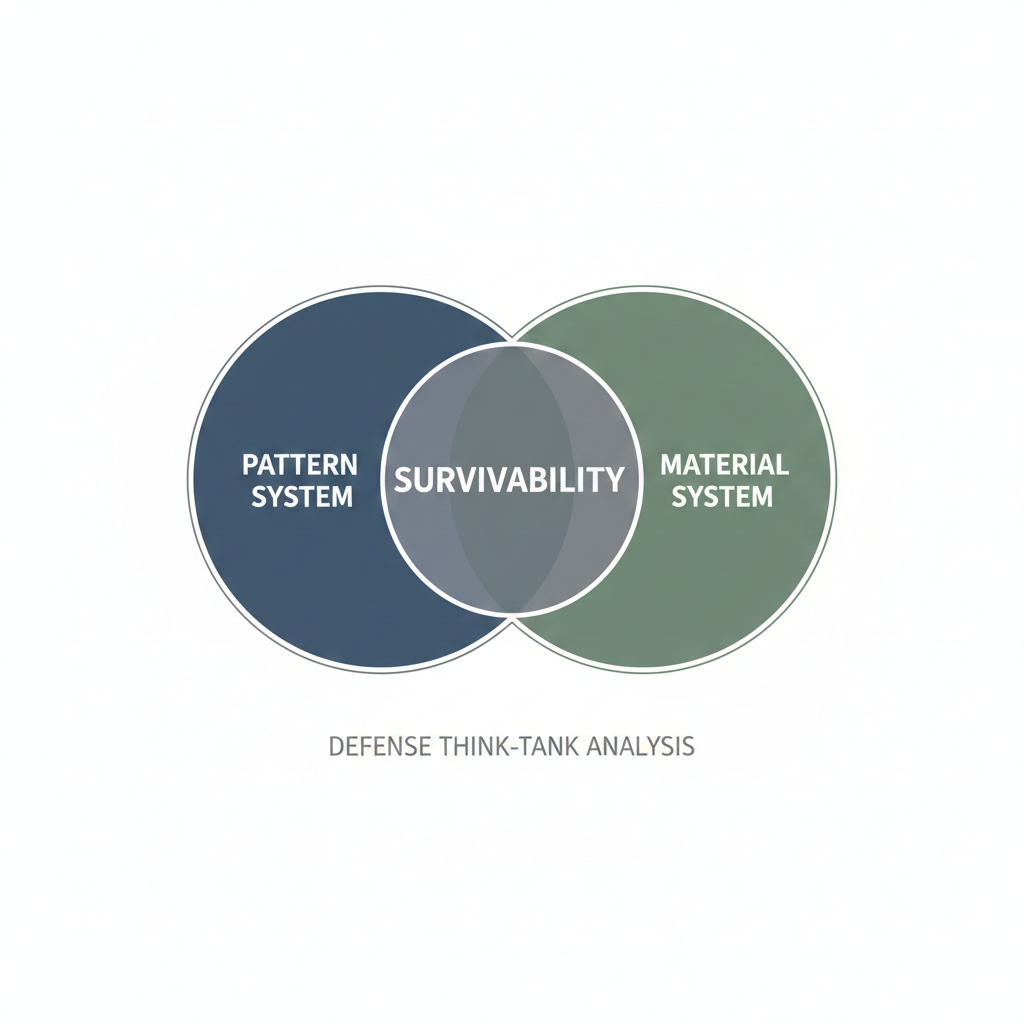
What truly sets Armatha apart, however, is the recognition that a Pattern System becomes meaningless if the Material System cannot genuinely support it. A camouflage pattern designed to function at close, medium, and long ranges cannot reach its full potential if the fabric restricts movement, forces rigid postures, or creates fixed silhouettes that allow the opponent’s brain to re-identify the human “signature.” The choice of Nylon Spandex 4-way stretch is therefore not about comfort or fashion—it is a systems-level design decision that inseparably links perceptual disruption with freedom of movement. When the body moves naturally, camouflage performs more effectively: repeated edges are reduced, rigid postures are minimized, and recognizable human outlines become harder for the brain to process.
The result of integrating the Pattern System and the Material System is the elevation of the uniform from something merely worn into a true survivability system—one that operates simultaneously at the cognitive and physical levels. In the context of the tactical industry, this represents far more than the launch of a new camouflage pattern. It shifts the design standard from asking “Does it look camouflaged?” to “Does it truly fight the brain?”—and from asking “Is the fabric durable?” to “Does the fabric enhance or undermine the camouflage system itself?”
At this point, ATAMAT and NAVYK are not simply camouflage patterns for the Royal Thai Army and the Royal Thai Navy/Marine Corps. They serve as tangible examples of how global-level knowledge can be systematically adapted to a local context. They demonstrate that Thailand’s tactical industry can move beyond merely following others and toward truly system-based design. This is the real significance of the path Armatha Defense has chosen—not to create just another camouflage pattern, but to permanently elevate the standards of thinking, design, and production across the entire tactical ecosystem.


 TAC MASTER
 TAC MASTER